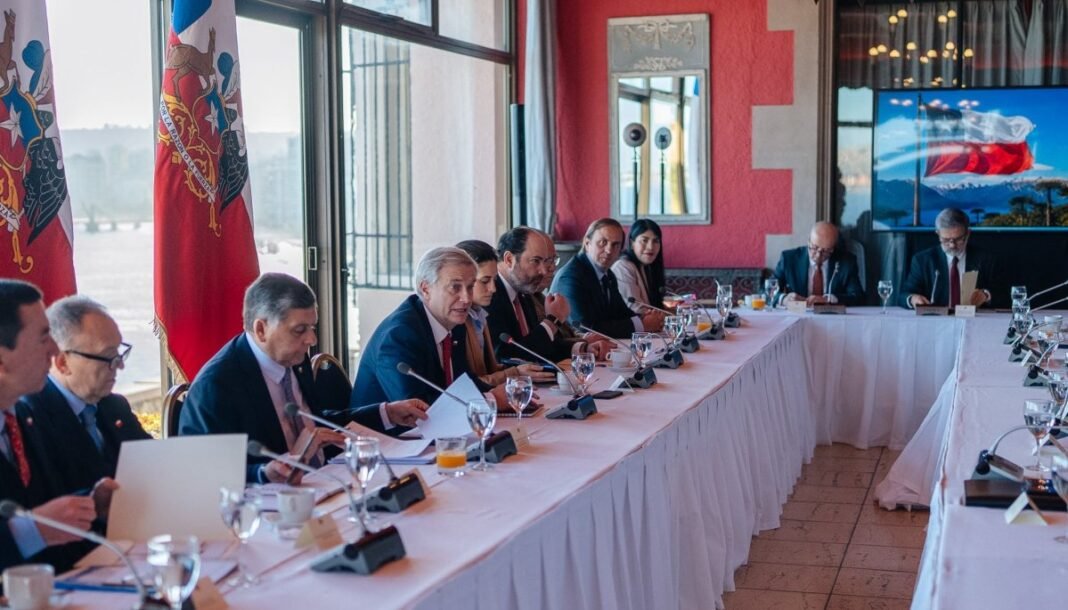
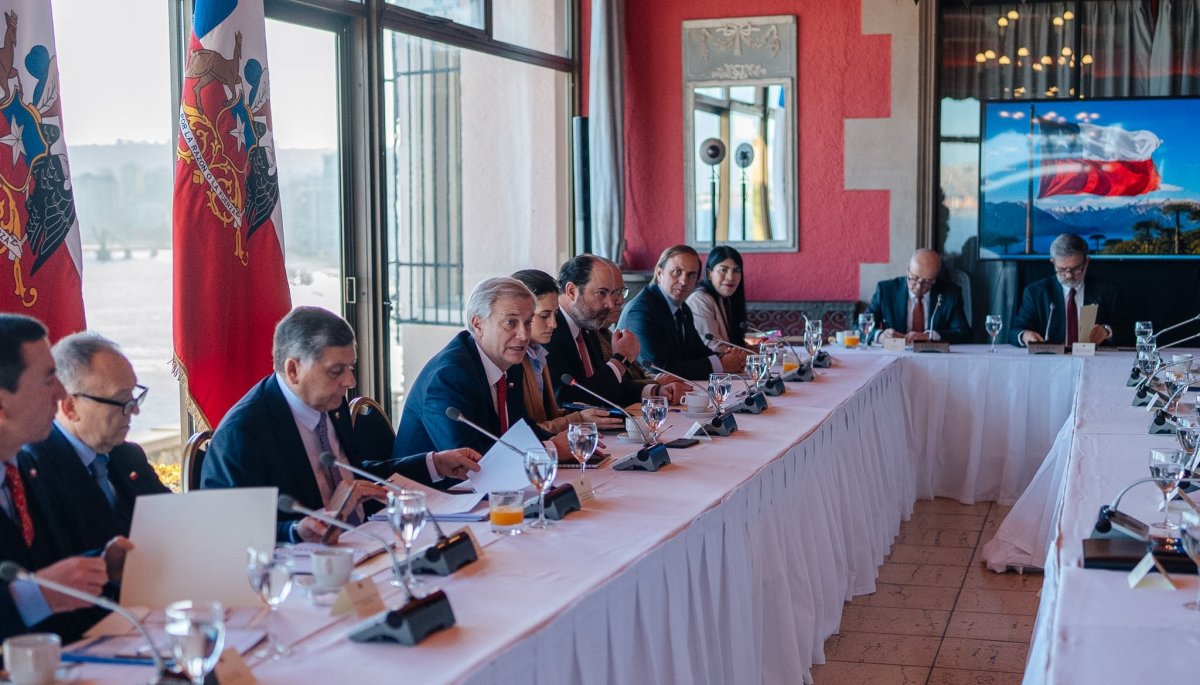
The official readout frames the trip as Chilean Foreign Minister Patricio Torres participated in the seventh Cabinet Council, led by President José Antonio Kast. The statement does not mention any other attendees at the council.
Background
The meeting addressed government priorities alongside the principal lines of work being undertaken to confront the country’s challenges. According to the press release, Frank Tressler, Subsecretary of External Relations, toured Puerto de Arica and the border zone to strengthen coordination within the Ministry of Foreign Affairs. Additionally, Canciller Pérez Mackenna strengthened Chile’s alliance with Japan following a meeting with Minister of Foreign Affairs, Mitsubishi’s Vice-President Executive.
Analysis
The focus on “priorities” and “challenges” suggests an immediate concern with economic matters. The simultaneous engagement in strengthening alliances with Japan – as detailed by Canciller Pérez Mackenna – indicates a dual strategy: addressing domestic concerns while simultaneously pursuing strategic partnerships. This approach, however, lacks specificity regarding the nature of these challenges or the specific trade-offs being considered.
The involvement of Tressler in Arica highlights Chile’s continued focus on its northern border region and potential security considerations within that area. The meeting with Mitsubishi signals a deliberate effort to cultivate economic ties with a major global player, possibly aiming for investment or access to new markets – the statement does not address the sectors of interest.
Implications
This activity suggests Chile is prioritizing immediate stabilization within its economy. Should the government’s stated priorities prove consistent, it could signal a shift towards greater engagement with traditional partners like Japan, potentially influencing regional trade agreements and bolstering Chilean influence in the Asia-Pacific region. The involvement in Arica raises questions about potential border security cooperation – the statement does not address any specific threats or collaborations.
The continued strengthening of relations with Japan could have significant implications for Chile’s foreign policy orientation, particularly if it involves increased investment and trade flows. However, without further clarification regarding the “challenges” being faced, it is difficult to assess the full extent of this strategic realignment.
Outlook
If the visit yields tangible agreements with Japan concerning investment or trade, Chile would demonstrate a proactive approach to economic diversification. Should the government’s focus remain solely on addressing immediate “challenges” without outlining specific policy solutions, it risks appearing reactive and lacking a coherent long-term strategy – the statement does not address potential risks.
Conclusion
The meeting’s outcome hinges on articulating the precise nature of Chile’s economic difficulties. The lack of detail surrounding these challenges leaves open the question of whether this Cabinet Council represents a genuine shift in policy or merely an attempt to project confidence amidst uncertainty.