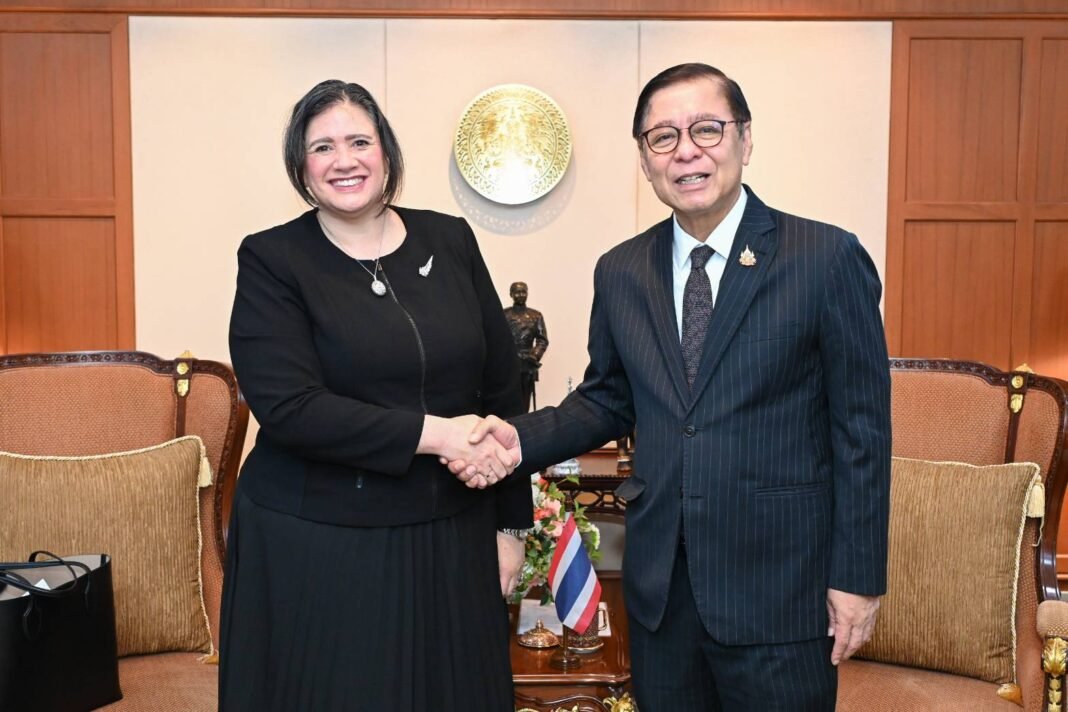
The official readout frames the trip as On August 11, 2026, Deputy Prime Minister and Minister of Foreign Affairs Sihasak Phuangketkeow met with Ambassador Raylene Siale Tagaloa Liufalani during her assumption of duty in Thailand. This meeting immediately signals a prioritization of elevating the bilateral relationship to “Strategic Partnership,” a designation explicitly outlined within the Ministry’s 20-Year “5S” Foreign Affairs Masterplan – a plan that, according to the statement, aims to bolster Thailand’s influence across Southeast Asia and beyond. The fact that this high-level engagement occurred upon her arrival underscores the immediate intent of both nations to actively shape the trajectory of their future collaboration.
Background
The Ministry’s “5S” Masterplan, established in 2016, details Thailand’s foreign policy objectives over two decades. This framework advocates for ‘Security,’ ‘Stability,’ ‘Sustainability,’ ‘Strategic Partnerships,’ and ‘Soft Power.’ The Joint Plan of Action 2026 – 2030 represents a key operational component, designed to deliver tangible outcomes across various sectors. The statement references a 70th anniversary of diplomatic relations between Thailand and New Zealand in 2026, creating a specific timeline for enhanced engagement. This anniversary is framed as a catalyst for increased high-level exchanges – a mechanism the Ministry intends to utilize strategically.
Analysis
The stated commitment to triple trade value by 2045 represents a significant ambition, driven by economic realities and potentially influenced by broader regional trade dynamics. The focus on reciprocal investment suggests a desire for increased foreign direct investment from New Zealand into Thailand’s burgeoning technology sector – a key area of government focus. However, the statement does not address potential challenges related to regulatory differences or market access barriers. The emphasis on “people-to-people connections,” including resuming direct flights and airport cooperation, highlights a recognition of tourism’s importance to both economies. Furthermore, the agreement to advance regional cooperation within the Mekong subregion demonstrates Thailand’s continued role as a facilitator in this critical economic zone. Crucially, the reference to New Zealand’s involvement through the Mekong Institute and Mekong River Commission signals an alignment with sustainable development initiatives – a priority for Bangkok.
Implications
For policymakers, this meeting represents a deliberate effort to solidify Thailand’s strategic alliances within Southeast Asia. The pursuit of a “Strategic Partnership” with New Zealand could unlock opportunities in areas such as cybersecurity, given New Zealand’s expertise in this field—a recognized global concern. Should the visit yield concrete outcomes regarding trade and investment, it could significantly impact Thailand’s economic growth forecast. The commitment to regional cooperation, particularly within the Mekong subregion, has implications for broader geopolitical dynamics in Southeast Asia, reinforcing Thailand’s position as a key player. The agreement to collaborate on addressing global challenges – food security, energy, and cybersecurity – reflects Thailand’s growing engagement with multilateral forums.
Outlook
If the resumption of direct flights proceeds as planned, it would alleviate logistical constraints for businesses operating across borders and potentially stimulate tourism revenue. Should the Joint Plan of Action 2026 – 2030 deliver on its ambitious trade targets by 2045, Thailand’s economic growth could accelerate significantly. Given the stated commitment to combating transnational crime, future collaboration with New Zealand could focus on intelligence sharing and law enforcement capacity building – a challenging area requiring careful coordination.
Conclusion
The meeting between Deputy Prime Minister Phuangketkeow and Ambassador Liufalani establishes a framework for intensified engagement. The success of this partnership hinges on the ability to translate stated intentions into tangible outcomes, particularly regarding trade liberalization and regional development initiatives – an open question regarding Thailand’s capacity to achieve its 2045 goals.