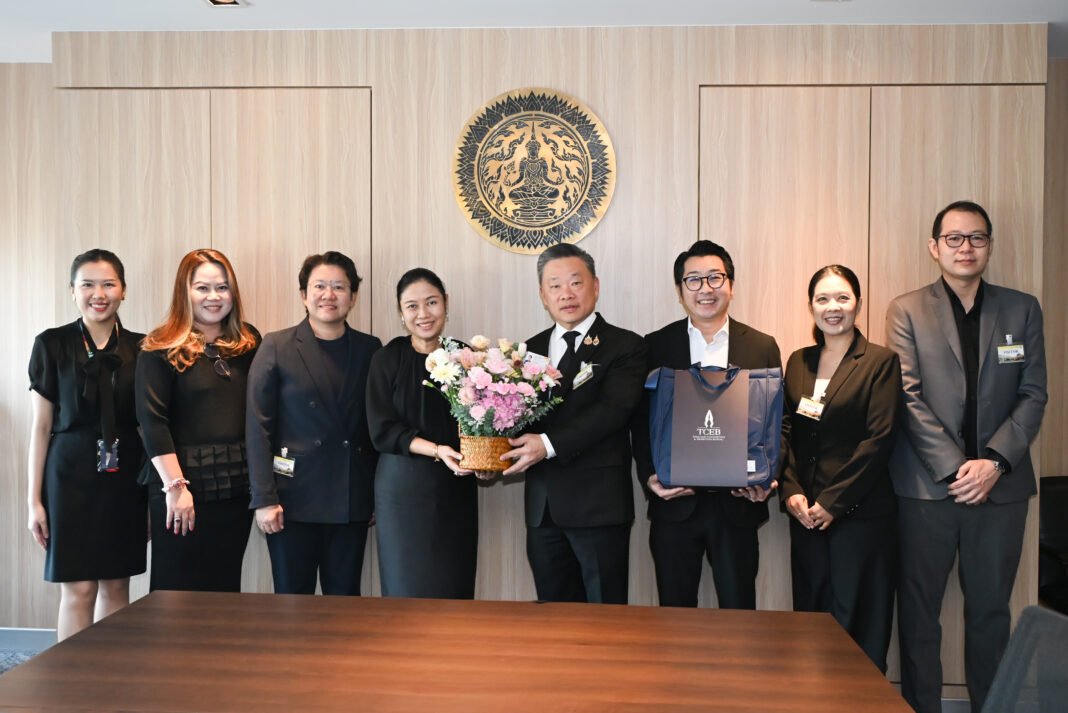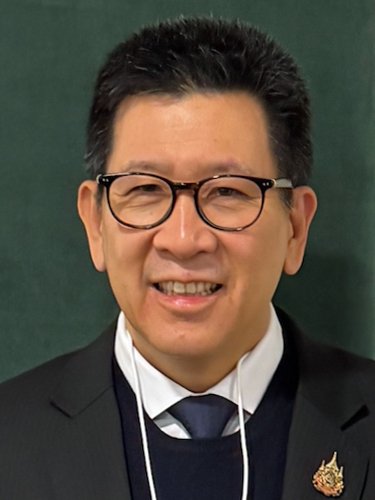
In a published statement ahead of the visit, During 12 – 15 August 2026, Deputy Prime Minister and Minister of Foreign Affairs Sihasak Phuangketkeow will visit the Russian Federation, a fact underscored by the Ministry of Foreign Affairs’ official statement. This trip—focused on co-chairing the 9th Joint Commission on Bilateral Cooperation (JC) Thailand – Russia—represents a deliberate effort to bolster trade and investment between the two nations, reflecting a strategic prioritization within Thailand’s broader economic diplomacy agenda.

Background
Thailand and Russia have maintained longstanding relations, characterized by significant trade flows. The statement highlights that Russia is Thailand’s largest trading partner within the Eurasian Economic Union (EAEU). Furthermore, the upcoming 130th anniversary of diplomatic ties in 2027 represents a milestone event intended to reinforce this partnership. The Joint Commission on Bilateral Cooperation serves as the primary mechanism for advancing this relationship, facilitating discussions and identifying areas for collaboration.
Analysis
The visit’s timing— coinciding with the planned expansion of the Thailand-Russia Business Council (RTBC)—suggests a concerted effort to translate diplomatic engagement into tangible economic outcomes. The inclusion of high-level representatives from the Russian Federation, including H.E. Mr. Alexander Novak and H.E. Mr. Aleksey Chekunkov, indicates a serious commitment on the Russian side. This delegation’s attendance alongside the Chairman of the Eurasian Economic Commission reflects Russia’s interest in integrating Thailand more deeply into its economic sphere. The focus on boosting trade and investment aligns with Thailand’s stated “5S Foreign Affairs Masterplan,” prioritizing strategic partnerships to drive economic growth.
Implications
The visit, if successful, carries significant implications for regional stability. Increased trade between Thailand and Russia could reshape economic flows within the EAEU, potentially influencing broader geopolitical dynamics. The participation of a business delegation—comprising six leading Thai companies— signals a tangible investment commitment from Bangkok. Should the planned expansion of cooperation materialize, it could challenge existing trade patterns with other Southeast Asian nations. Furthermore, the agreement to establish a Plan of Consultations between the Ministry of Foreign Affairs of the Kingdom of Thailand and the Ministry of Foreign Affairs of the Russian Federation in 2026 – 2028 provides a framework for ongoing dialogue and collaboration.
Outlook
If the discussions at the Joint Commission yield positive outcomes, particularly concerning investment opportunities within Russia’s Far East and Arctic regions—as highlighted by H.E. Mr. Bakytzhan Sagintayev’s involvement — Thailand could experience a significant boost in exports. Should the Plan of Consultations be successfully implemented over its designated timeframe, it would provide a stable mechanism for addressing potential trade barriers or regulatory discrepancies. However, the success hinges on Russia’s continued commitment to economic engagement and the ability of Thai companies to navigate the evolving geopolitical landscape.
Conclusion
The visit by Deputy Prime Minister Phuangketkeow to Moscow represents a deliberate gamble—a focused effort to solidify Thailand’s position within the Eurasian Economic Union. The ultimate success, however, remains contingent on bridging economic realities with persistent geopolitical tensions, leaving open the question of sustained partnership in an increasingly complex world.