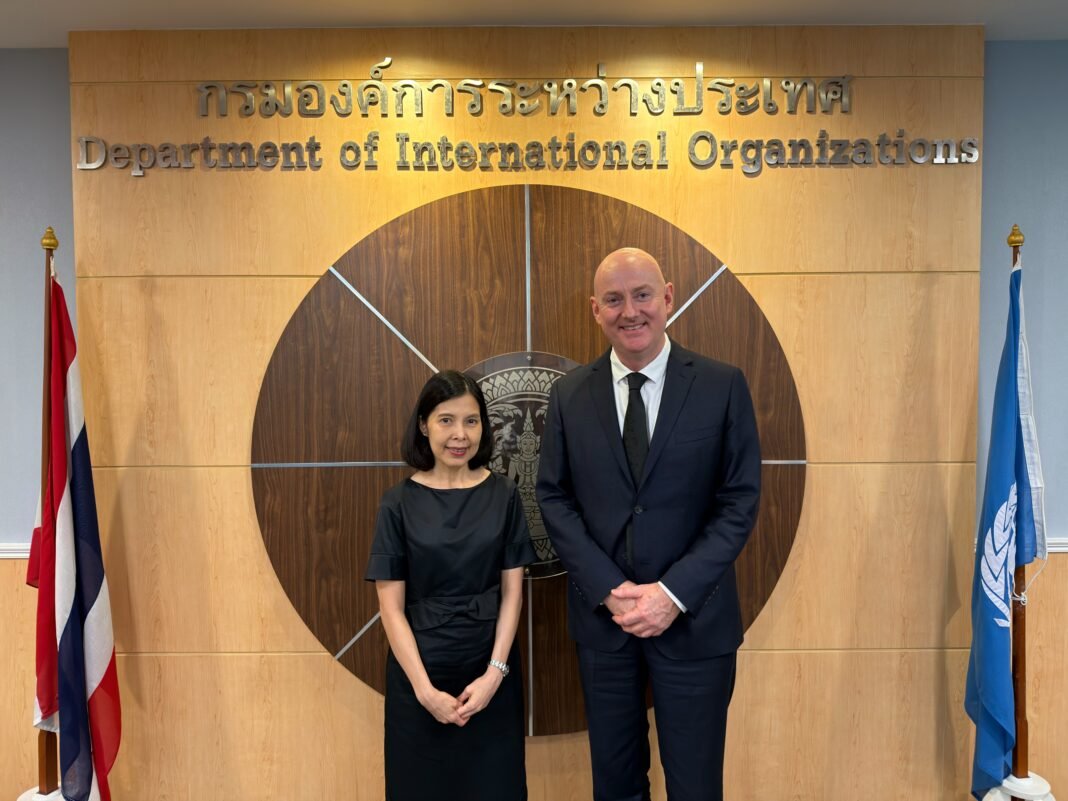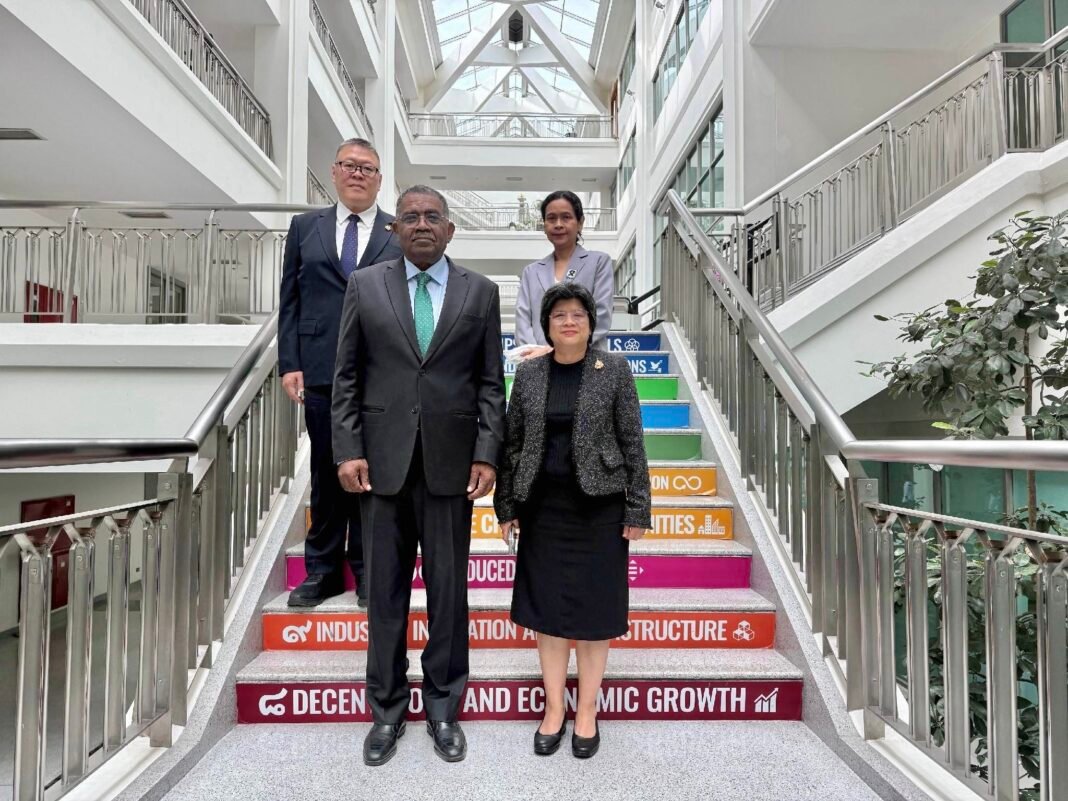
Per the government announcement, The meeting between Director-General Urasa Mongkolnavin and Ambassador Hassan Abdel Salam Omer on August 8th, 2026, focused on bolstering bilateral relations and mutual cooperation, with Thailand identifying Sudan as a priority nation within its Thailand-Africa Initiative (TAI) framework. This signals a shift in Thai foreign policy towards the African continent, driven by an assessment of Sudan’s recovery efforts and potential areas for collaboration – a fact underscored by the Ministry’s renewed attention to the TAI.
Background
Thailand’s approach to Africa is formalized through the Thailand-Africa Initiative (TAI), launched in 2019, intended to advance cooperation across four key domains: political, economic, development cooperation, and global strategic cooperation. The TAI designates specific countries as priorities, with Sudan currently positioned within this framework. This designation is linked to the Ministry’s broader diplomatic strategy, aiming for deeper engagement beyond traditional trade relationships. The statement does not mention any prior discussions or agreements relating to Sudan before this meeting.
Analysis
The Director-General’s emphasis on Sudan as a priority under the TAI reflects a strategic calculation regarding regional instability. The briefing received from Ambassador Omer concerning Sudan’s national recovery efforts – specifically progress in development cooperation, agriculture, fisheries, manufacturing and energy – suggests an assessment that, despite ongoing challenges, Sudan represents a viable partner for Thai investment and technical assistance. This prioritization is contingent on the continued stability of the Sudanese government and its ability to implement reforms. The statement does not address any potential risks associated with operating within a volatile political environment.
Implications
This renewed focus on Sudan carries implications for Thailand’s broader Southeast Asian foreign policy. It demonstrates an expansion of Thai engagement beyond its traditional regional partnerships, potentially broadening diplomatic leverage and offering alternative avenues for economic cooperation. The emphasis on development cooperation and strategic partnership could also influence Thailand’s role in international forums, particularly those addressing humanitarian crises or post-conflict reconstruction. However, the statement does not address the potential impact of this shift on existing trade agreements or security alliances.
Outlook
Should the meeting yield a commitment to increased development cooperation, Thailand’s approach will depend heavily on Sudan’s political stability and its ability to attract international investment. If ‘Colours of Africa 2026’, the Ministry of Foreign Affairs event in September, proves successful in fostering mutual understanding, it may serve as a foundation for further engagement. Should instability persist within Sudan, Thailand’s commitment to development assistance will likely be scaled back, focusing instead on maintaining diplomatic channels.
Conclusion
The meeting with the Sudanese Ambassador represents a targeted effort, but the statement offers no insight into Thailand’s long-term strategy for engagement in Africa or the criteria used to select priority countries within the TAI. The future of this relationship hinges on Sudan’s ability to secure sustained progress towards its stated recovery goals.