
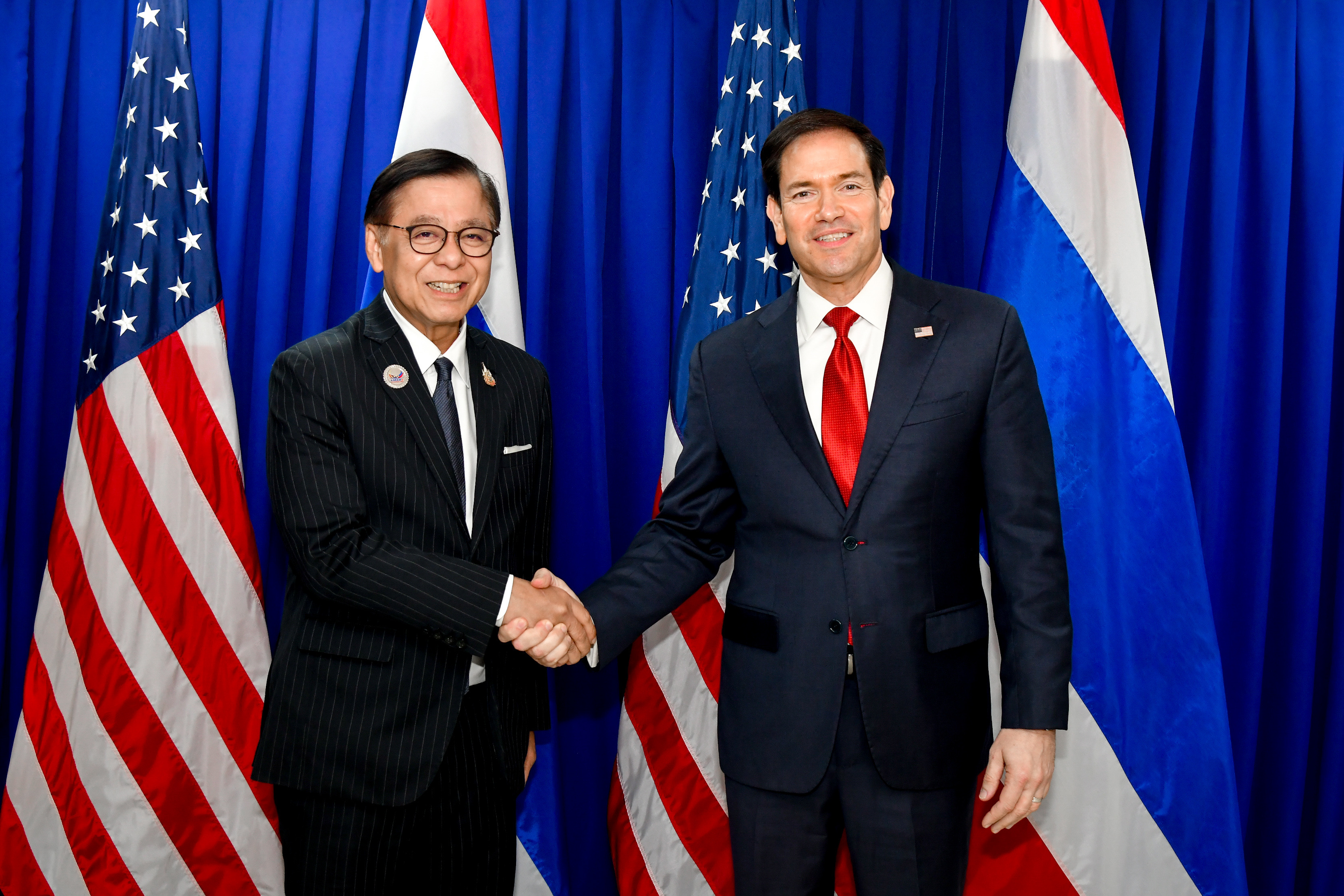
On July 23, 2026, Deputy Prime Minister and Minister of Foreign Affairs Sihasak Phuangketkeow met with U.S. Secretary of State Marco Antonio Rubio on the sidelines of the 59th Annual Meeting of the ASEAN-U.S. Dialogue (AMM/PMC) in Manila, Philippines. This engagement represents a reaffirmation of the longstanding Thai-U.S. alliance, as stated by both parties. The significance lies in the continued operationalization of a bilateral relationship facing considerable external pressures—particularly concerning border disputes with Cambodia and the complex situation within Myanmar. — the full statement has further detail.
Background
The statement does not mention specific prior meetings or agreements beyond the reaffirmation of the alliance. However, it references the “5S Foreign Affairs Masterplan,” a 20-year strategic framework outlined by the Ministry of Foreign Affairs aiming for stability, security, and prosperity. This plan, as detailed in the MFA’s annual reports, emphasizes strengthening relationships with key regional partners—including the United States—to achieve Thailand’s foreign policy objectives. The meeting occurred during the AMM/PMC, a forum primarily focused on ASEAN-U.S. cooperation but providing a valuable platform for bilateral discussions. The statement does not elaborate on the specifics of the “prompt conclusion of trade negotiations,” only indicating its importance as an element of mutual benefit.
Analysis
The core incentive driving this renewed engagement is the desire to maintain stability within Southeast Asia. The Thai-U.S. alliance offers a framework for addressing shared concerns, particularly regarding transnational crime – specifically “online scams,” as highlighted by the meeting’s agenda. This suggests a recognition that conventional diplomatic channels may be insufficient to tackle these issues. Simultaneously, the exchange of views on regional situations—including the Thailand-Cambodia situation and developments in Myanmar—demonstrates a prioritization of regional security considerations. The statement does not address whether this engagement will impact Thailand’s approach to its ongoing border dispute with Cambodia or influence its policy toward Myanmar. If implemented as described, the economic partnership element represents a key strategic priority for Thailand, potentially offering access to U.S. markets and investment.
Implications
The meeting’s implications extend beyond bilateral relations. For policymakers, it signals a continued commitment to multilateralism while simultaneously seeking targeted partnerships. The focus on combating online scams could lead to increased cooperation in law enforcement and intelligence sharing – though the extent of this collaboration remains undefined. Regionally, the engagement underscores Thailand’s determination to play a role in managing tensions within Southeast Asia, even if indirectly through its relationship with Washington. Trade negotiations represent a potential catalyst for economic growth, but their prompt conclusion is contingent on overcoming existing obstacles. The security implications are similarly conditional—a strengthened alliance could bolster Thailand’s ability to influence regional dynamics.
Outlook
Should the visit yield a commitment to continued dialogue and cooperation, it would represent a stabilizing factor in Southeast Asia. If the trade negotiations progress as desired, this could benefit both Thai and U.S. economies – though the statement does not address potential challenges or timelines. Should the situation in Myanmar continue to deteriorate, Thailand’s engagement with the United States may become increasingly critical for shaping regional responses. The meeting’s impact on Thailand’s approach to its border dispute with Cambodia remains uncertain—it does not specify whether this will influence diplomatic efforts or security measures.
Conclusion
The July 23rd meeting concluded with a reaffirmation of alliance, but the statement offers no indication of concrete deliverables. The ongoing complexities within Southeast Asia continue to shape Thailand’s foreign policy priorities – and the value of this renewed engagement remains fundamentally dependent on the evolving geopolitical landscape.