
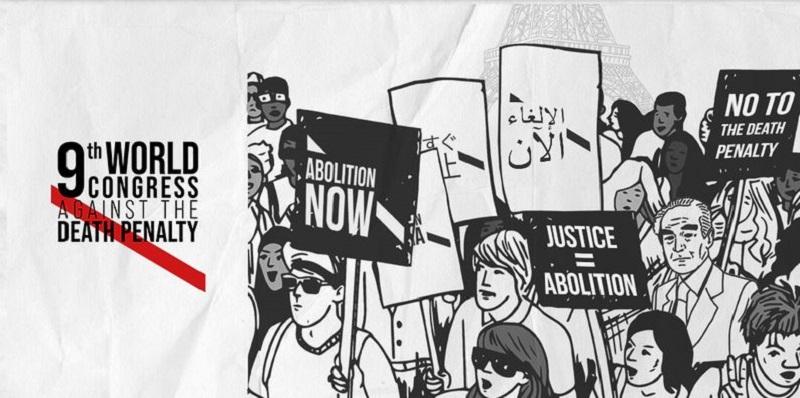
France will host the 9th World Congress Against the Death Penalty from 30 June to 2 July 2026, a gathering described as a “key event for the global abolitionist movement.” Organized by the non‑governmental group Ensemble contre la Peine de Mort – Together Against the Death Penalty, the congress invites political, institutional, judicial and civil‑society actors, together with the general public and especially young people. The programme runs at two Paris venues – Maison de la Radio et de la Musique on 30 June and 1 July and Hôtel de Lassay on 2 July. A tribute will honor Robert Badinter, whose campaign led to France’s abolition of the death penalty, while Jean‑Noël Barrot is slated to deliver a formal address. The event is timed to the 45th anniversary of France’s abolition law and is presented as a demonstration of France’s leadership and its cooperation with European partners, international organisations and civil‑society networks.
Background
The press release, first published on 25 June 2026 and updated on 1 July 2026, places the congress within a series that began in Strasbourg in 2001. The annual World Congress provides a platform for abolitionist stakeholders to exchange ideas, hold working sessions on specific topics and engage a broad audience. This edition marks the 45th anniversary of France’s abolition of the death penalty, a law that remains a reference point for global advocacy. By hosting the congress in Paris, the French Ministry of Europe and Foreign Affairs underscores the nation’s continued commitment to the cause, alongside collaboration with European partners and international bodies.
Analysis
The organising NGO benefits from a high‑visibility venue that reinforces its mission and integrates young participants into the abolitionist network. French officials gain a diplomatic signal that France remains at the forefront of human‑rights advocacy, a narrative that can be leveraged in multilateral settings. The tribute to Robert Badinter links the historic abolition law to contemporary activism.
The statement does not mention how the congress will be funded, whether public resources are allocated, or how security will be coordinated across the two venues. These omissions make it difficult to assess the practical stakes for French authorities.
Jean‑Noël Barrot’s scheduled address signals political endorsement, but the release provides no insight into the substance of his speech. The statement does not detail any specific policy proposals or commitments that may emerge from the event, leaving the scope of “universal abolition” ambiguous.
Implications
If the congress succeeds in galvanising a wide audience, it could reinforce France’s moral authority on capital‑punishment issues and potentially influence future EU positions on human‑rights conditions in trade agreements. The statement does not mention any link between the congress and ongoing diplomatic negotiations, so any impact on France’s external agenda remains speculative.
The spotlight on abolition may encourage neighboring countries to reconsider death‑penalty statutes, especially where French diplomatic influence is strong, though the release provides no evidence of a coordinated outreach strategy beyond Europe.
From a security perspective, the dual‑venue format requires coordination across two historic sites, but the statement does not outline how authorities will manage potential risks.
Outlook
In the short term, the congress will likely generate media coverage that reinforces France’s image as a champion of abolition. Should the event attract substantial youth participation, it may help sustain the abolitionist movement’s momentum into the next electoral cycle. If Jean‑Noël Barrot’s address includes actionable recommendations, French policymakers could face pressure to incorporate those into domestic or EU‑level initiatives.
Medium‑term scenarios depend on the post‑congress engagement strategy, which the release does not describe. If organizers and officials follow up with concrete cooperation agreements with European partners, the event could translate symbolic commemoration into measurable policy steps. Conversely, if the congress remains a one‑off commemoration without sustained outreach, its influence may wane, leaving France’s leadership claim untested.
Conclusion
The congress offers France a platform to reaffirm its abolitionist legacy, but the official communication leaves critical questions about financing, security and tangible policy outcomes unanswered, inviting scrutiny of whether symbolic celebrations will evolve into substantive action.