
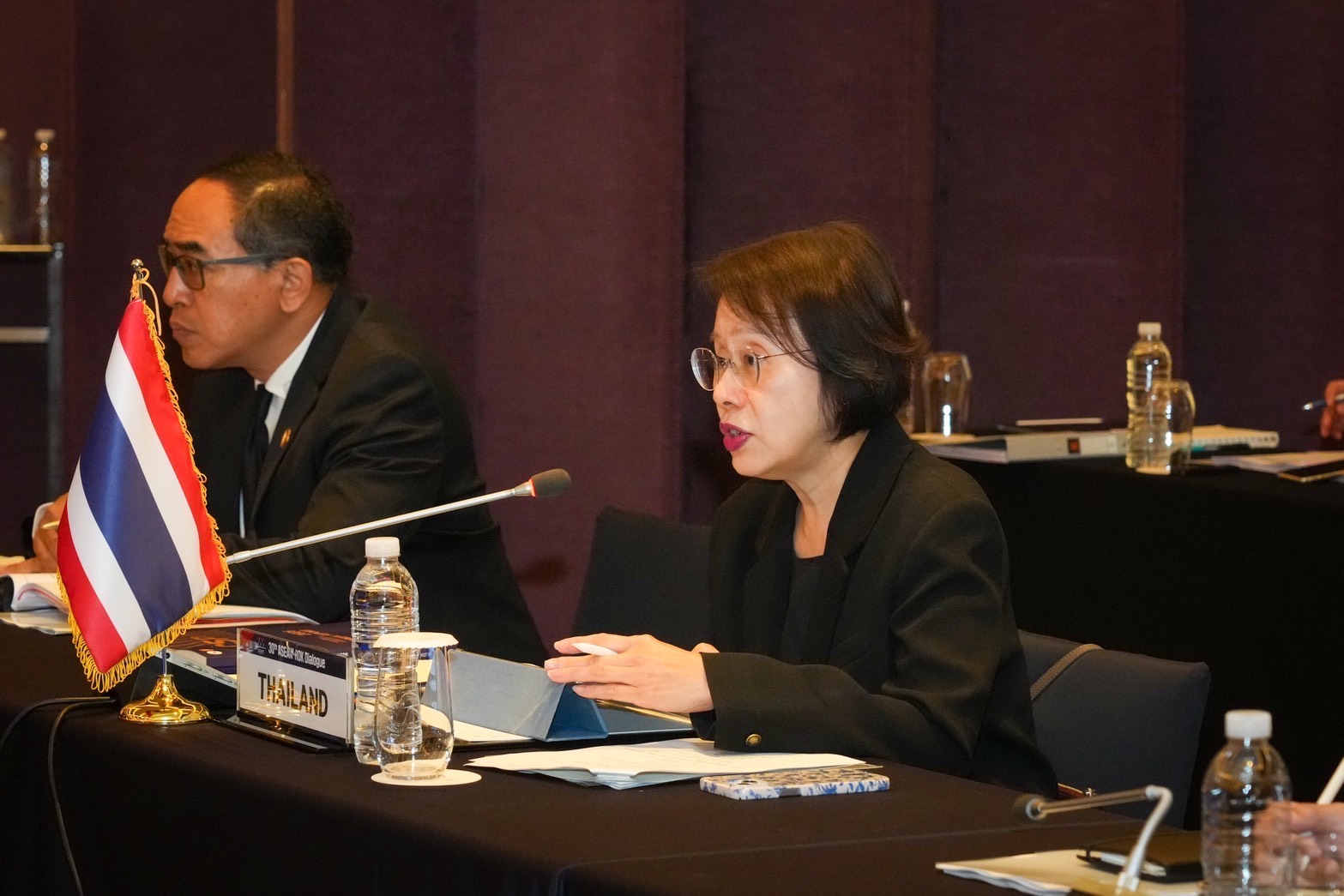
On 7 July 2026 Mrs Eksiri Pintaruchi, Permanent Secretary for Foreign Affairs and Country Coordinator for ASEAN‑ROK Dialogue Relations (2024‑2027), co‑chaired the 30th ASEAN‑ROK Dialogue in Seoul with Deputy Minister H.E. Ms Cecilia Chung, the Republic of Korea’s senior official for political affairs. The meeting was framed as a preparatory step for the ASEAN Post‑Ministerial Conference scheduled later in July in Manila.
Background
The dialogue highlighted three priority tracks identified in the official communiqué:
- Accelerating the upgrade of the ASEAN‑Korea Free Trade Agreement (AKFTA) to deepen economic integration.
- Expanding collaboration on sustainable investment, supply‑chain diversification, and cross‑border payment connectivity.
- Advancing the digital‑economy partnership through the ASEAN Digital Economy Framework Agreement (DEFA) and cooperating against cyber‑enabled crimes.
In side‑session talks, the two officials also discussed plans to commemorate the 70th anniversary of Thailand‑ROK diplomatic relations in 2028, including prospective high‑level exchanges and trade cooperation.
Analysis
The release positions the three tracks as key mechanisms for advancing the ASEAN‑ROK Comprehensive Strategic Partnership. By urging a “swift conclusion” of the AKFTA upgrade, Thailand signals a desire to lock in tariff reductions and market‑access provisions that it believes will support its export base. The emphasis on “sustainable investment” and supply‑chain diversification reflects Bangkok’s intent to reduce reliance on any single production hub, though the statement does not specify which advanced industries are targeted. The digital‑economy agenda links economic integration with security concerns; cooperation on cyber‑enabled crimes is presented as a prerequisite for a trusted digital ecosystem, suggesting that Thailand views cyber‑security as integral to deeper digital ties. The statement does not detail the operational mechanisms for this cooperation.
Implications
For Thailand, the outlined priorities imply a need to align domestic policy measures with the proposed regional initiatives. The statement does not mention specific legislative or regulatory steps required to implement the AKFTA upgrade, nor does it outline incentive structures for sustainable investment. Similarly, the digital‑economy track is described in broad terms without reference to concrete standards or implementation timelines, leaving the practical scope of cooperation undefined.
Regionally, Thailand’s articulation of these priorities may shape expectations among other ASEAN members regarding the ASEAN‑ROK partnership. The statement does not address how the three tracks will be coordinated across the broader ASEAN community or what mechanisms will ensure equitable participation.
Outlook
If the AKFTA upgrade is concluded promptly, Thailand could benefit from reduced tariff barriers, provided the necessary customs and regulatory adjustments are effected. Should negotiations stall, the anticipated trade‑resilience gains would be postponed, potentially limiting Thailand’s leverage in subsequent ASEAN‑ROK discussions.
Progress on the sustainable‑investment track will depend on the translation of the stated intent into concrete projects. The statement does not specify timelines or financing arrangements, so the realization of these investments remains uncertain.
Advancement of the digital‑economy partnership hinges on the development of interoperable standards and effective cyber‑crime countermeasures. The release does not outline a roadmap, so the speed and scope of digital integration are conditional on future agreements.
The planned high‑level exchanges for the 70th diplomatic anniversary in 2028 provide a longer‑term reference point. If these exchanges materialise into substantive policy outcomes, they could reinforce bilateral cooperation beyond the immediate agenda; if they remain largely symbolic, the strategic impact may be limited.
Conclusion
The 30th ASEAN‑ROK Dialogue presents Thailand with an opportunity to align its trade, investment, and digital‑economy objectives with a major regional partner. The real test will be whether the three priority tracks move from declarative intent to actionable policies that can withstand implementation challenges and broader regional dynamics.