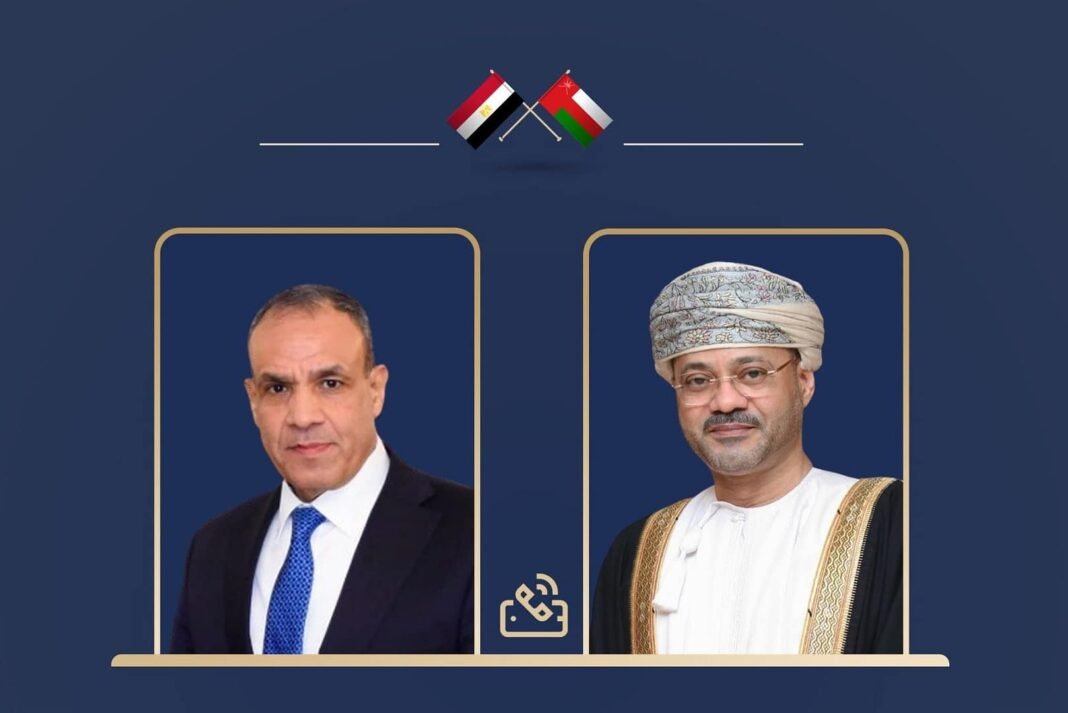
The telephone call between Oman’s Foreign Minister Sayyid Badr Albusaidi and Dr Badr Abdelatty, Minister of Foreign Affairs, International Cooperation and Egyptians Abroad of the Arab Republic of Egypt, on 3 November 2026, reflects a renewed emphasis on regional stability, as stated in the official release. The conversation’s core purpose—addressing “rapidly evolving developments” and ongoing diplomatic efforts—highlights the immediate concern surrounding tensions and the pursuit of political understandings. This engagement, a continuation of previous diplomatic contacts, underscores Oman’s role as a facilitator in a region grappling with conflict and instability, a region where maritime security remains a critical element. (Read the full statement.)

Background
Prior statements by the Ministry indicate a pattern of engagement with regional counterparts. In March, the ministry announced Minister Albusaidi’s phone calls with counterparts from Egypt, the UAE, and France. This November call with Egypt follows a September meeting in New York with Dr Abdelatty on the sidelines of the United Nations General Assembly. Furthermore, in October, Minister Albusaidi engaged in a phone call with South Africa’s Minister of International Relations and Cooperation, Ronald Lamola. These repeated contacts suggest a consistent strategy of coordinating diplomatic efforts across a geographically diverse set of nations, reflecting a proactive approach to regional security concerns.
Analysis
The focus on “containment of tensions” and “preventing renewed military confrontations” reveals a significant concern within the Omani diplomatic strategy. The statement does not address the specific conflicts driving these tensions, nor does it detail the nature of the “diplomatic efforts.” The emphasis on “safeguarding maritime corridors and the safety of navigation” points to a strategic interest in maintaining stability within the Red Sea region, a critical trade route. The call’s timing – coinciding with “rapidly evolving developments” – suggests a response to immediate crises. The exchange of views on “sustainable solutions” implies a desire to move beyond short-term crisis management towards longer-term security arrangements. The stated goal of “creating conditions for a return to dialogue and political understandings” suggests a cautious optimism regarding the potential for renewed negotiations, a strategy shaped by previous diplomatic outreach.
Implications
This engagement carries implications for regional stability. Should the coordination and consultation outlined in the statement yield positive outcomes, it could contribute to a de-escalation of tensions, potentially reducing the risk of further military confrontation. The emphasis on maritime security has implications for international naval forces operating in the region. The call’s focus on “sustainable solutions” suggests an interest in supporting longer-term efforts to address the root causes of instability. The exchange with Egypt, a nation itself engaged in regional conflicts, highlights the potential for Oman to play a mediating role.
Outlook
If the visit yields a commitment to intensified coordination, as the statement suggests, then Oman’s continued engagement with Egypt could support regional efforts to de-escalate tensions. Should the call’s focus on safeguarding maritime corridors be prioritized, Oman may increase its diplomatic efforts to encourage greater cooperation amongst regional navies. The statement does not address whether this contact will lead to a broader coalition or if it remains a bilateral effort.