
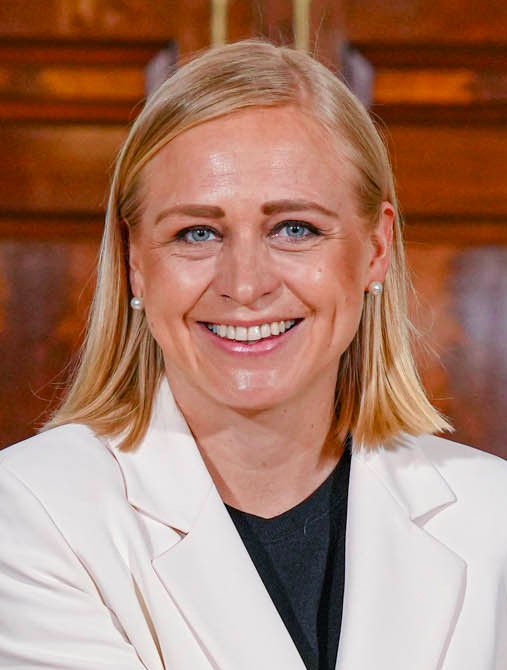
Details in a press release show that The United States, through Secretary of State Marco Rubio, signed a Memorandum of Understanding with Finnish Foreign Minister Elina Valtonen on October 29, 2026, outlining a Critical Minerals Framework. This action signifies a deliberate effort to secure access to materials essential for advanced technologies, including semiconductors, batteries, and defense systems – a sector now dependent on reliable supply chains. The statement does not address the specific quantities or types of minerals to be traded, but highlights Finland’s expertise in mining and refining as a strategic partnership.

Background
This event follows previous meetings between Secretary Rubio and Finnish counterparts, including three bilateral meetings in Washington D.C. during Rubio’s tenure. The statement references a third bilateral meeting in Washington, alongside several meetings on the sidelines of the UN and NATO meetings, most recently in New York during the Arctic allies meeting in September. The Ministry of State also cited a prior agreement, dated , with Lithuania, focused on critical minerals, as a precursor to this framework. Previous statements by the Ministry have highlighted ongoing efforts to strengthen economic ties between Finland and the United States, particularly regarding Finnish exports and investments.
Analysis
The signing of the Critical Minerals Framework represents a key element of the United States’ broader strategy to diversify its supply chains for strategically important materials. The statement does not address the potential implications for global mineral markets, but Finland’s recognized expertise in mining and processing – detailed in the agreement – suggests a targeted approach. The agreement’s emphasis on technology – semiconductors, batteries, defense systems – reflects the increasing interconnectedness of these sectors. Should the visit yield a more formalized agreement, the United States would be leveraging Finland’s capabilities to bolster its domestic industrial base and enhance its strategic autonomy. The framework’s success hinges on the ability of both parties to effectively coordinate their respective efforts.
Implications
For policymakers, the Critical Minerals Framework signals a renewed commitment to securing access to vital resources, a priority increasingly shaped by geopolitical considerations. The agreement strengthens ties with a reliable partner like Finland, bolstering Washington’s ability to influence global supply chains. The agreement’s focus on technology prosperity deals, particularly in areas like quantum and nuclear, suggests a longer-term strategy to maintain U.S. leadership in these fields. The increased trade in goods and services between Finland and the United States, currently over 60 percent growth in the past few years, further reinforces the economic implications of this partnership.
Outlook
If the Critical Minerals Framework is successfully implemented, it could lead to increased investment in Finnish mining and processing capabilities. Should the agreement yield a more detailed roadmap for cooperation, the United States could benefit from Finland’s expertise in refining critical minerals. The agreement does not address the potential for future disagreements or challenges in securing access to these resources, but it lays the groundwork for a sustained partnership.
Conclusion
The signing of the Critical Minerals Framework with Finland establishes a new pillar in Washington’s efforts to secure technological advantage, but the statement does not specify the immediate scope or volume of trade. The long-term success of this partnership hinges on the ability of both nations to navigate evolving geopolitical risks and maintain a robust and mutually beneficial relationship.
Sources & Further Reading
- Official press release
- Foreign ministry source
- Secretary of State Marco Rubio and Lithuanian Foreign Minister Kęstutis Budrys at the Critical Minerals Framework Memorandum of Understanding Signing Ceremony (Unknown Da)
- Secretary Rubio and Hungarian FM Orbán at a MOU Signing Ceremony on Energy Infrastructure and Regional Energy Security and on Law Enforcement Cooperation and Information Exchange (Unknown Da)
- Secretary of State Marco Rubio and 2015 Venezuelan National Assembly President Dinorah Figuera Before Their Meeting (Unknown Da)


