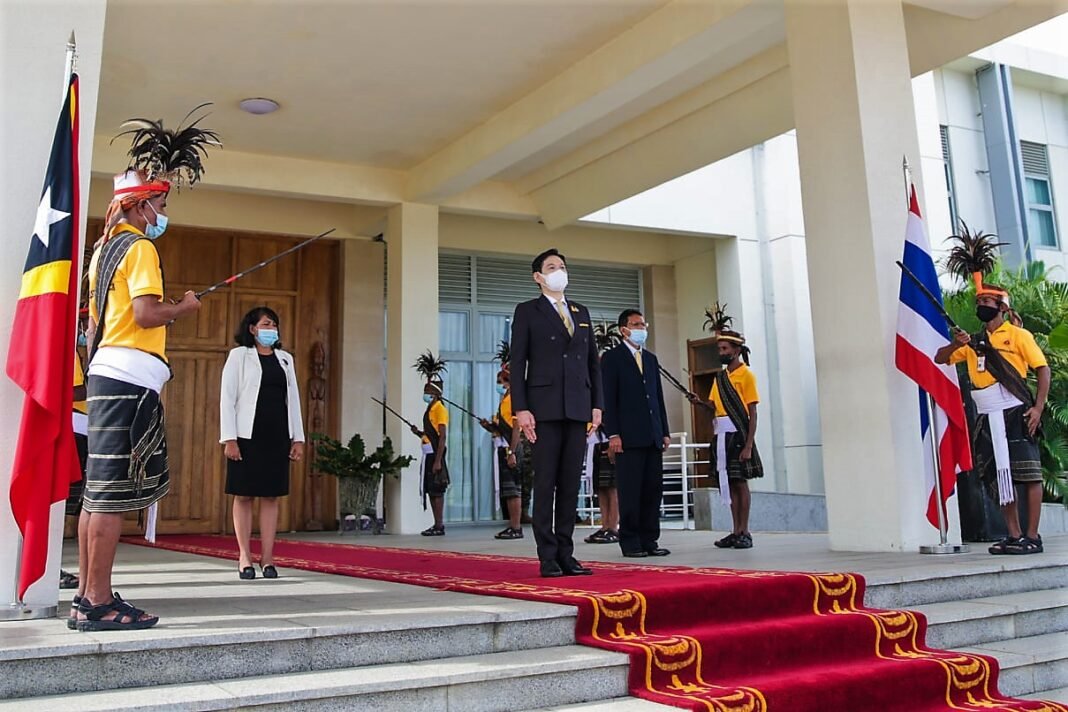
The Kingdom of Thailand and the Democratic Republic of Timor-Leste finalized a joint statement on 9 October 2026 outlining a contribution of 150 million Thai Baht towards the development of the Luang Prabang – Vientiane rail line, as detailed in the Ministry of Foreign Affairs press release. This commitment, representing a significant portion of the project’s initial funding, underscores a deepening strategic alignment between the two nations amidst evolving geopolitical pressures in Southeast Asia. The agreement’s focus on infrastructure development signals Thailand’s continued interest in regional connectivity and its willingness to support Timor-Leste’s economic diversification efforts. — the full statement has further detail.

Background
Prior to this joint statement, the Ministry of Foreign Affairs issued a press release on 4 October 2026 announcing the Prime Minister of the Democratic Republic of Timor-Leste’s official visit to Thailand from 9 to 10 October 2026 as a Guest of the Government. This visit, as detailed in the 30 September 2026 statement concerning a visit to Laos, represents a series of diplomatic engagements focused on strengthening bilateral ties. The 20-Year “5S” Foreign Affairs Masterplan, outlined in the Ministry’s policy statement, prioritizes strategic partnerships with nations sharing similar geopolitical interests. The rail project itself, a key component of Timor-Leste’s broader economic development strategy, has been under discussion for several years, with initial feasibility studies completed in 2023. The Ministry of Foreign Affairs’ earlier statement of 1 October 2026 regarding a courtesy call on the Prime Minister of Laos highlights the consistent prioritization of Southeast Asian engagement within Thailand’s foreign policy.
Analysis
The Thai government’s decision to allocate 150 million Baht to the Luang Prabang – Vientiane rail line reflects a calculated investment aimed at bolstering regional trade routes and supporting Timor-Leste’s aspirations for economic growth. The statement does not address the specific criteria for selecting Timor-Leste as a recipient of this funding. If implemented as described, the contribution will primarily support track maintenance and operational costs, rather than core infrastructure construction. The timing of the announcement, coinciding with the Prime Minister’s visit, suggests a deliberate effort to signal Thailand’s ongoing commitment to the project and to reinforce the strategic value of the partnership. The continued focus on infrastructure development, a consistent theme in Thailand’s foreign policy, suggests an attempt to counterbalance potential shifts in regional power dynamics. The statement does not address the potential for increased Chinese influence in the region or the impact of the rail project on Timor-Leste’s trade relations.
Implications
The agreement has immediate implications for Timor-Leste, providing crucial financial support for the operational phase of the rail line, a project vital to its economic integration with Southeast Asia. For Thailand, the commitment reinforces its role as a key regional investor and demonstrates its dedication to fostering stability and connectivity within the ASEAN bloc. The initiative could also present opportunities for Thai companies to participate in the rail line’s maintenance and logistics services, potentially boosting Thailand’s export sector. The agreement does not mention any specific security considerations related to the rail line’s operation, though this is likely to be a factor in future discussions. The commitment could further strengthen Thailand’s diplomatic influence within ASEAN, particularly concerning infrastructure projects in the region.
Outlook
Should the visit yield further discussions regarding broader economic cooperation, Thailand could potentially secure additional investment in sectors such as tourism and renewable energy. If the rail project remains on schedule, the 150 million Baht contribution will represent a significant step towards realizing its full potential as a catalyst for economic growth in Timor-Leste. However, should delays or unforeseen challenges arise with the rail project – specifically regarding border negotiations with Laos – Thailand’s commitment could be reviewed. The Thai Ministry’s ongoing focus on the “5S” Foreign Affairs Masterplan suggests a long-term commitment to strategic partnerships, but the success of this initiative will ultimately depend on the sustained political will of both governments.
Sources & Further Reading
- Official press release
- Foreign ministry source
- Prime Minister of the Democratic Republic of Timor-Leste to pay an official visit to Thailand as a Guest of the Government during 9 – 10 October 2026 (4 Oct 2026)
- Deputy Prime Minister and Minister of Foreign Affairs to pay official visit to Lao PDR (30 Sep 202)
- Deputy Prime Minister and Minister of Foreign Affairs pays a courtesy call on the Prime Minister of the Lao People’s Democratic Republic during his official visit to the Lao People’s Democratic Republic (1 Oct 2026)