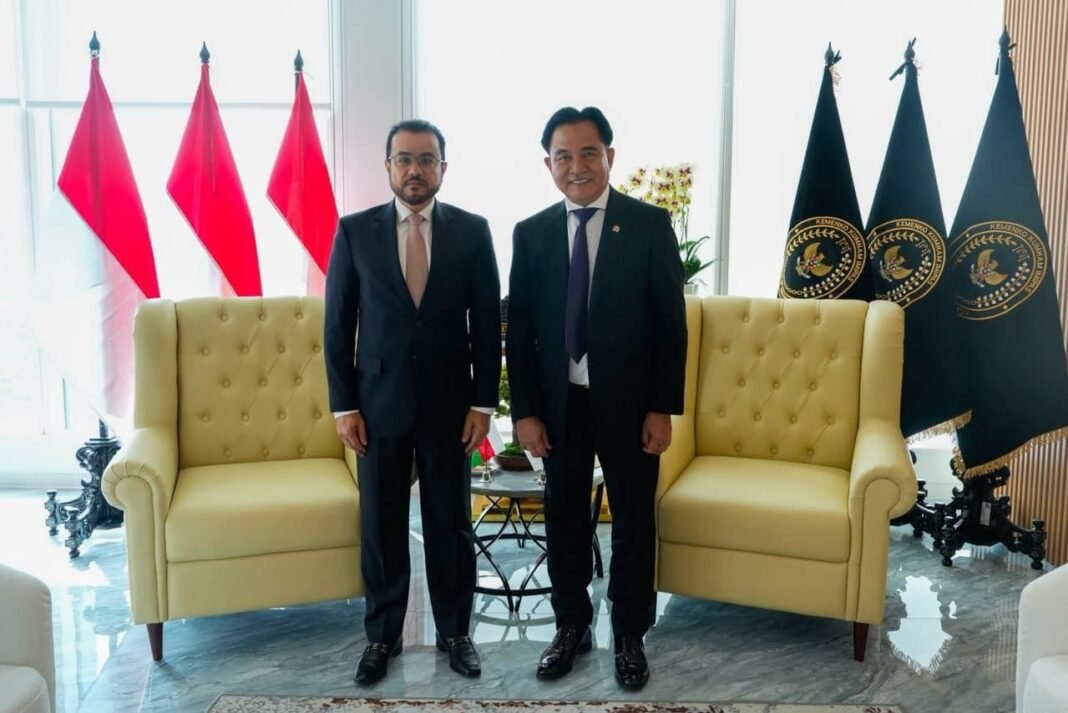
The official readout frames the trip as More than 600 parliamentarians from around the world will gather for the Assembly, which is hosted for the first time by Tanzania and takes place in Arusha between 5-9 October 2026. Sir Lindsay and his counterparts will discuss how to deliver good governance, empower communities, and tackle shared challenges, including climate change and inequality. This suggests a prioritization of multilateral engagement on pressing international issues.

Background
The Inter-Parliamentary Union (IPU) Assembly is a forum for parliamentarians from around the world to exchange ideas and best practice. The Assembly is hosted for the first time by Tanzania. The statement does not address the history of the IPU or the specific objectives of the 153rd Assembly beyond the stated goals.
Sir Lindsay Hoyle MP, UK Speaker of the House of Commons, said: In a world that faces a number of challenges, it’s so important for parliamentarians to have a forum to discuss how we deal with these in an ever more interconnected society. The IPU Assembly will be a great opportunity to exchange ideas and best practice with parliamentary colleagues from across the globe. He will meet young Tanzanians and alumni of UK-supported Commonwealth and Chevening scholarship programmes, to hear about their achievements and leadership aspirations.
Sally Hedley, UK Chargé d’Affaires to Tanzania, said: I am delighted to welcome UK Speaker Sir Lindsay Hoyle to Tanzania for the 153rd Inter-Parliamentary Union Assembly, to engage with fellow parliamentarians on good governance and tackling shared global challenges. The UK is proud to be a longstanding development partner in Tanzania, working alongside Tanzanians to expand inclusive education and provide opportunities for ambitious young leaders to study at the UK’s world-class universities. This reflects a continued commitment to bilateral cooperation.
The statement does not mention the number of UK-supported Commonwealth and Chevening scholarship programmes. It also does not specify the funding amount allocated to these programmes in Tanzania.
Analysis
The visit highlights a focus on governance and shared challenges. The inclusion of discussions on climate change and inequality indicates a recognition of global interconnectedness and the need for collaborative solutions. The engagement with young leaders reflects a strategic investment in future leadership capacity within Tanzania.
The planned visits to a Special Secondary School and students and teachers at a school demonstrate a sustained commitment to inclusive education. The statement does not address the specific challenges faced by children with disabilities and special educational needs in Tanzania.
Implications
The visit has implications for UK-Tanzania relations, reinforcing a partnership built on shared values and development objectives. Should the visit yield opportunities for deepened collaboration on governance reforms, it could strengthen Tanzania’s democratic institutions. The engagement with young leaders potentially signals a long-term investment in human capital development.
The visit also has implications for the IPU’s broader mandate. The Assembly provides a platform for parliamentary engagement on global issues, and the UK’s participation contributes to this effort. The statement does not address the impact of the IPU on specific policy outcomes.
Outlook
If the visit yields productive discussions on governance reforms, it could support Tanzania’s efforts to improve accountability and transparency. Should the visit result in increased funding for inclusive education programmes, it would further strengthen the UK’s contribution to this sector.
If the discussions on climate change are substantive, the UK and Tanzania might explore joint initiatives to mitigate the impacts of climate change. The statement does not provide any indication of specific areas of cooperation that may emerge.
Conclusion
The visit represents a continuation of established diplomatic engagement, but the specific outcomes remain contingent on the quality of dialogue and the willingness of both parties to pursue concrete collaborations. The extent to which the Assembly will translate into tangible policy changes remains to be seen.