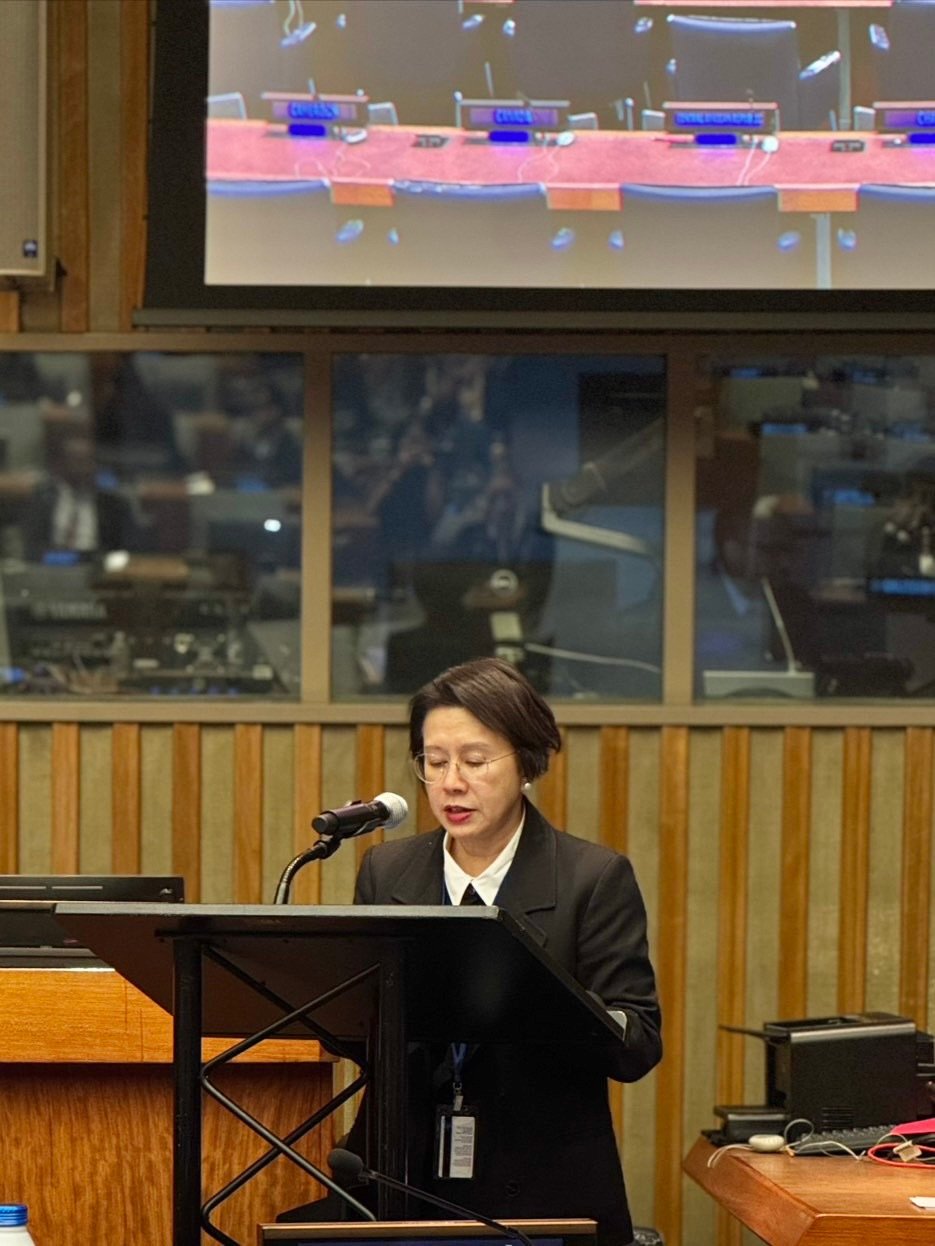
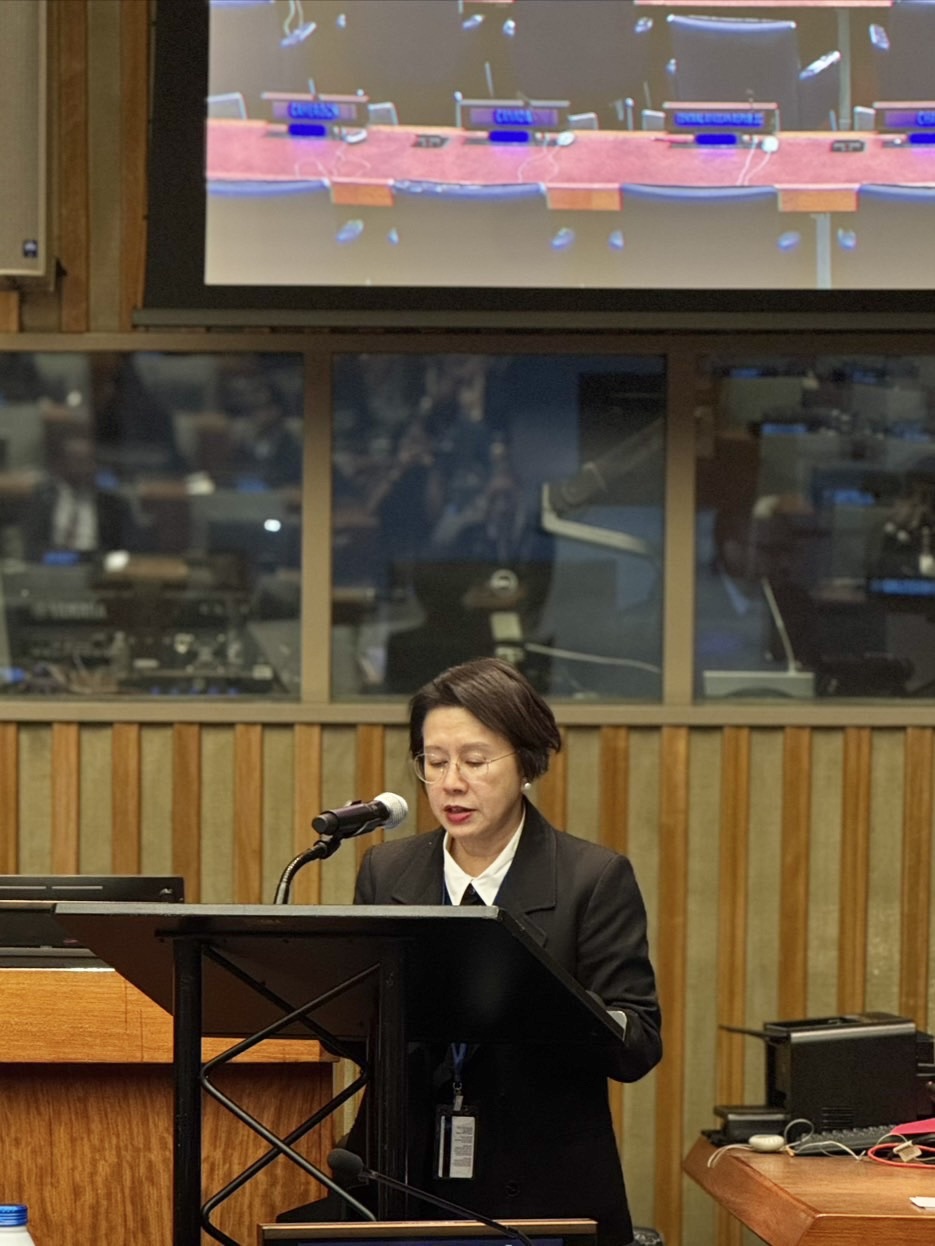
A ministry communiqué confirms that On 23 September 2026, Mrs. Eksiri Pintaruchi, Permanent Secretary for Foreign Affairs, delivered a statement at the High-Level Segment of the United Nations General Assembly to commemorate the 40th Anniversary of the Declaration on the Right to Development in New York. The statement reaffirmed Thailand’s commitment to promote and protect the right to development. This suggests a continued prioritization of this internationally recognized principle within the Ministry’s foreign policy framework. The fact that the statement occurred at the UNGA, a globally significant forum, underscores Thailand’s engagement with international efforts on development issues.
Background
The Permanent Secretary’s address followed the 19 September 2026 announcement by the Deputy Prime Minister and Minister of Foreign Affairs regarding his attendance at the High-level Week of the 81st Session of the United Nations General Assembly (UNGA81 High-level Week) at UN Headquarters, New York. This event provided the context for the Permanent Secretary’s presentation. Furthermore, the statement referenced the Ministry’s existing “5S” Foreign Affairs Masterplan, a 20-year strategic initiative outlined in the Ministry’s documentation. The 22 September 2026 attendance by the Vice Minister for Foreign Affairs at the United Nations International Day of Peace event also provides a relevant, though largely repetitive, historical backdrop – a demonstration of the Ministry’s active engagement with multilateral diplomacy.
Analysis
The Permanent Secretary’s emphasis on “ensuring that all people can participate in and benefit from sustainable and inclusive development” indicates a shift in framing, moving beyond purely economic indicators of progress. The statement’s focus on equality and inclusion suggests a response to criticisms regarding Thailand’s historical development model, which has been associated with significant disparities. Placing “people at the center of development” as explicitly stated, is a deliberate attempt to address concerns about the social and environmental consequences of rapid economic growth. The revitalization of the United Nations and strengthening global governance component of the statement reflects a desire to address global challenges—climate change, public health risks, and the digital divide—through collaborative, multilateral means. The reference to ASEAN reinforces Thailand’s regional role in fostering sustainable, inclusive, and people-centered development.
Implications
For policymakers, the Permanent Secretary’s statement signals an intent to align Thailand’s foreign policy more closely with contemporary development paradigms. This could translate into increased investment in social programs, environmental protection, and initiatives promoting digital inclusion. The emphasis on strengthening global governance has broader implications, potentially influencing Thailand’s participation in international institutions and its approach to addressing global challenges. The reference to ASEAN highlights Thailand’s commitment to regional cooperation, potentially leading to increased collaboration on shared development goals—particularly in areas such as infrastructure and trade.
Outlook
Should the visit yield continued engagement with the UN and other multilateral partners, Thailand could see increased technical assistance and funding opportunities focused on sustainable development initiatives. If the Ministry successfully advocates for reforms within the United Nations, it could contribute to a more effective and responsive global governance system. However, the statement does not address Thailand’s own domestic progress on indicators of development, such as income inequality or access to education. The continued emphasis on ASEAN cooperation, if implemented as described, could lead to greater integration within the Southeast Asian region, but also potentially expose Thailand to the economic and political dynamics of its neighbors.
Conclusion
The Permanent Secretary’s reaffirmation of Thailand’s commitment to the right to development, delivered at the UNGA, represents a carefully calibrated statement. The core question remains: will Thailand’s actions—specifically its resource allocation and policy implementation—demonstrate a genuine commitment to translating this principle into tangible outcomes within its own borders and across the region, or will it remain primarily a rhetorical commitment?
Sources & Further Reading
- Official press release
- Foreign ministry source
- Vice Minister for Foreign Affairs attends the United Nations International Day of Peace event (22 Sep 202)
- Deputy Prime Minister and Minister of Foreign Affairs to attend the High-level Week of the 81st Session of the United Nations General Assembly (UNGA81 High-level Week) at UN Headquarters, New York (19 Sep 202)
- Deputy Prime Minister and Minister of Foreign Affairs to attend the High-level Week of the 81st Session of the United Nations General Assembly (UNGA81 High-level Week) at UN Headquarters, New York (19 Sep 202)