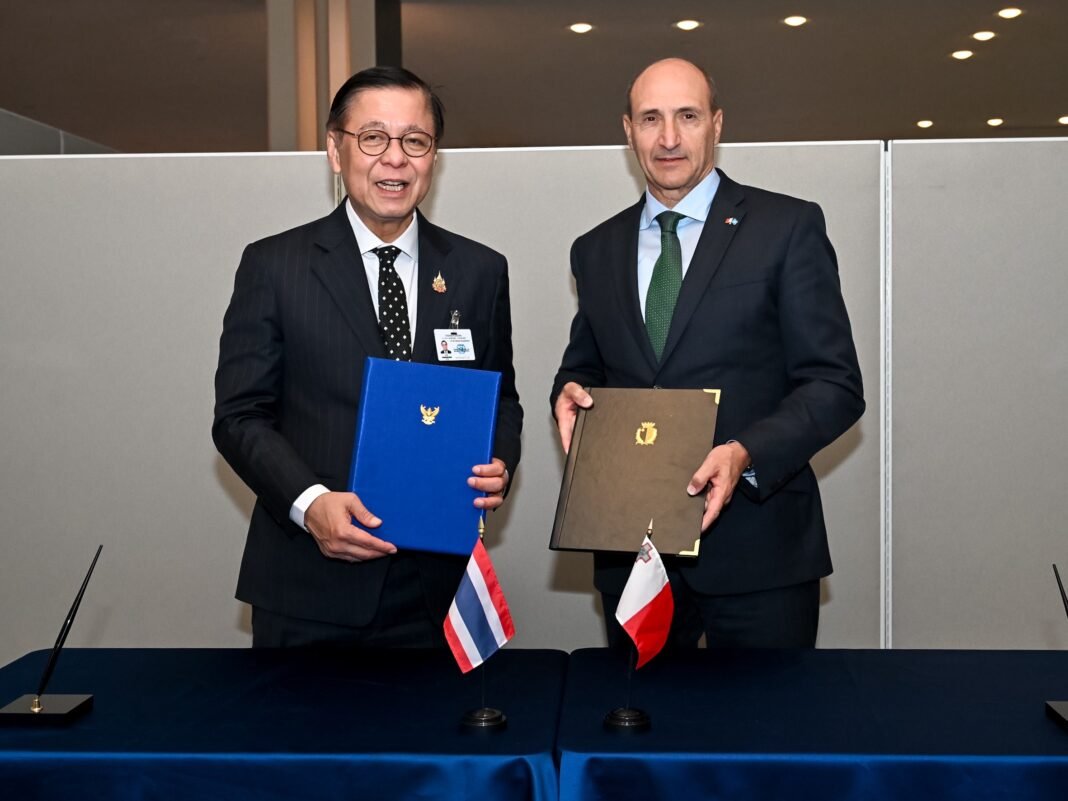
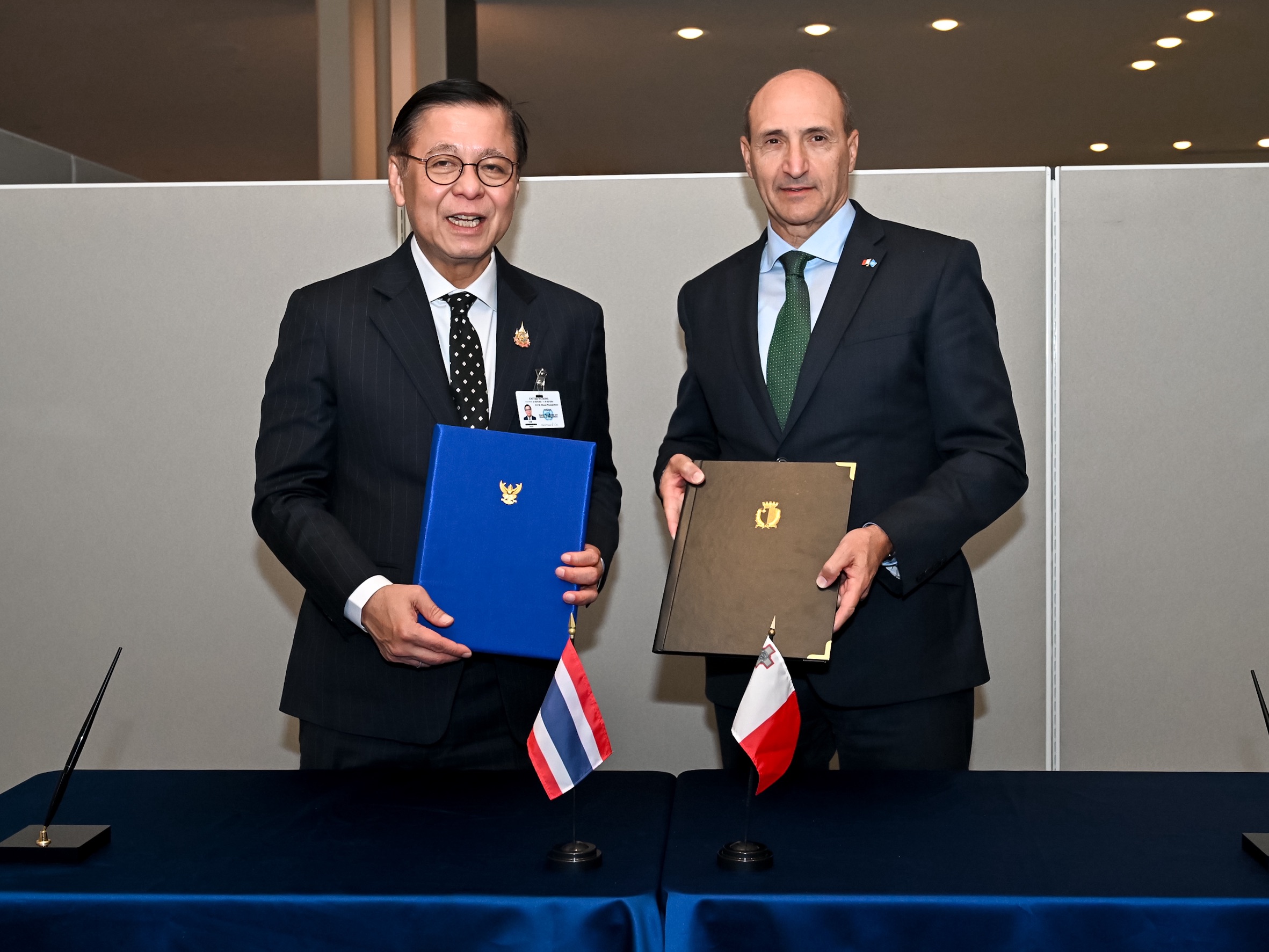
Details in a press release show that On 23 September 2026, Deputy Prime Minister and Minister of Foreign Affairs Sihasak Phuangketkeow co-signed a Memorandum of Understanding with Chris Fearne, Minister for Foreign and European Affairs of the Republic of Malta. This occurred in New York, United States of America, during the 81st Session of the United Nations General Assembly. The statement does not mention the specific goals of the mechanism beyond “promoting and developing cooperation in areas of mutual benefit” and serving as a “channel for exchanging views.” This suggests a desire to establish a more formal framework for bilateral relations, particularly as Thailand participates in a growing number of multilateral engagements.
Background
The signing of this MoU follows previous meetings between Thai and Maltese officials. The statement does not specify the dates or nature of these prior discussions. Prior to this event, on 11 September 2026, the Deputy Prime Minister and Minister of Foreign Affairs met with the Minister of Foreign Affairs of the Federative Republic of Brazil during Brazil’s official visit to Thailand. The Ministry of Foreign Affairs maintains a “20-Year ‘5S’ Foreign Affairs Masterplan,” the precise details of which are not detailed in this statement. The MFA’s website details the Ministry’s Vision & Mission, Executive Management, and Directory.
Analysis
The establishment of this Political Consultation Mechanism represents a deliberate step by Thailand to strengthen its diplomatic engagement with European nations. The proposed host location of Bangkok indicates a prioritization of Thailand’s capital as a venue for future discussions. The stated aims – “promoting and developing cooperation in areas of mutual benefit” – are broad, suggesting a flexible approach to bilateral relations. The MoU’s explicit inclusion of “regional issues of mutual interest” signals Thailand’s desire to participate in discussions concerning Southeast Asia and broader international concerns. The fact that both sides discussed “ways to further promote relations and expand Thailand-Malta cooperation in a closer and more concrete manner” indicates a willingness to move beyond purely symbolic gestures.
Implications
For Thailand, the MoU potentially opens avenues for increased collaboration with Malta in areas such as trade, investment, and tourism. The establishment of a formal consultation mechanism could provide a structured platform for addressing disputes and fostering mutual understanding. More broadly, this move aligns with Thailand’s broader diplomatic strategy of deepening relationships with nations across the globe. Should the visit yield a successful consultation, it could strengthen Thailand’s position within the European Union’s network of partners. The potential for increased engagement with the European Union, particularly given the EU’s focus on multilateralism and sustainable development, is a key consideration.
Outlook
If the first bilateral consultation in Bangkok proceeds as planned, the success of the mechanism will hinge on the willingness of both sides to engage in substantive dialogue. Should the consultation focus primarily on areas of shared interest, such as maritime security or counter-terrorism, the MoU’s objectives will be largely achieved. However, if disagreements arise regarding regional issues or trade practices, the mechanism could become bogged down in procedural disputes. The statement does not address the timeline for the first consultation or the specific topics that will be discussed.
Conclusion
The co-signing of this MoU represents a tangible effort by Thailand to broaden its diplomatic horizons. The question remains, however, whether this new mechanism will translate into genuine, sustained cooperation or remain a largely symbolic gesture, dependent on the willingness of both parties to engage in constructive dialogue.
Sources & Further Reading
- Official press release
- Foreign ministry source
- Deputy Prime Minister and Minister of Foreign Affairs to attend the High-level Week of the 81st Session of the United Nations General Assembly (UNGA81 High-level Week) at UN Headquarters, New York (19 Sep 202)
- Deputy Prime Minister and Minister of Foreign Affairs to attend the High-level Week of the 81st Session of the United Nations General Assembly (UNGA81 High-level Week) at UN Headquarters, New York (19 Sep 202)
- Deputy Prime Minister and Minister of Foreign Affairs meets with the Minister of Foreign Affairs of the Federative Republic of Brazil during his official visit to Thailand (11 Sep 202)