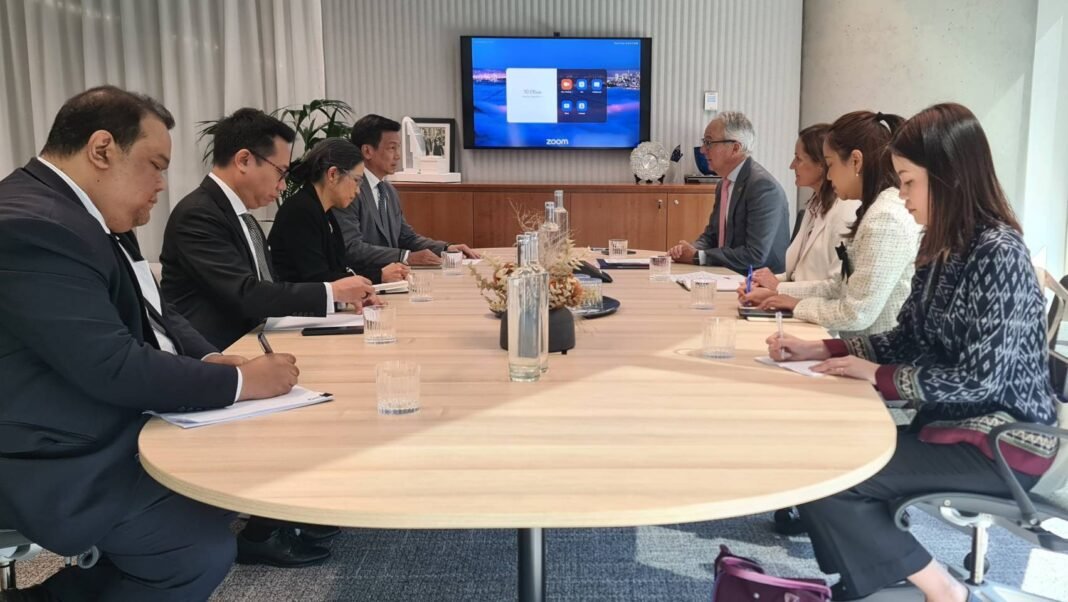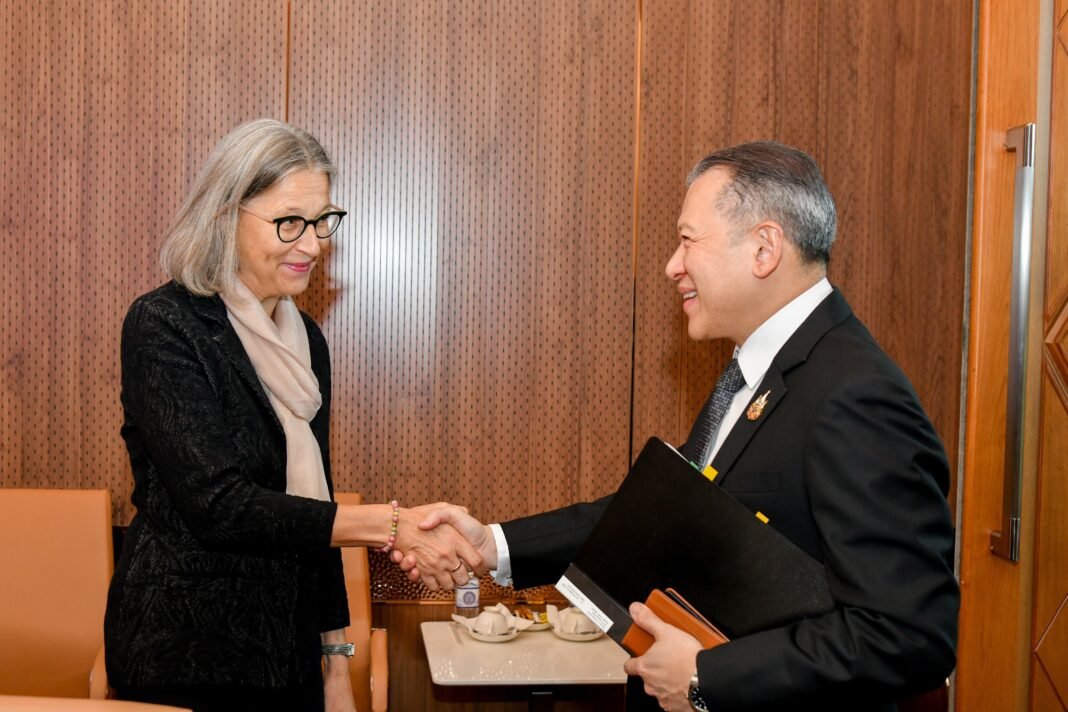
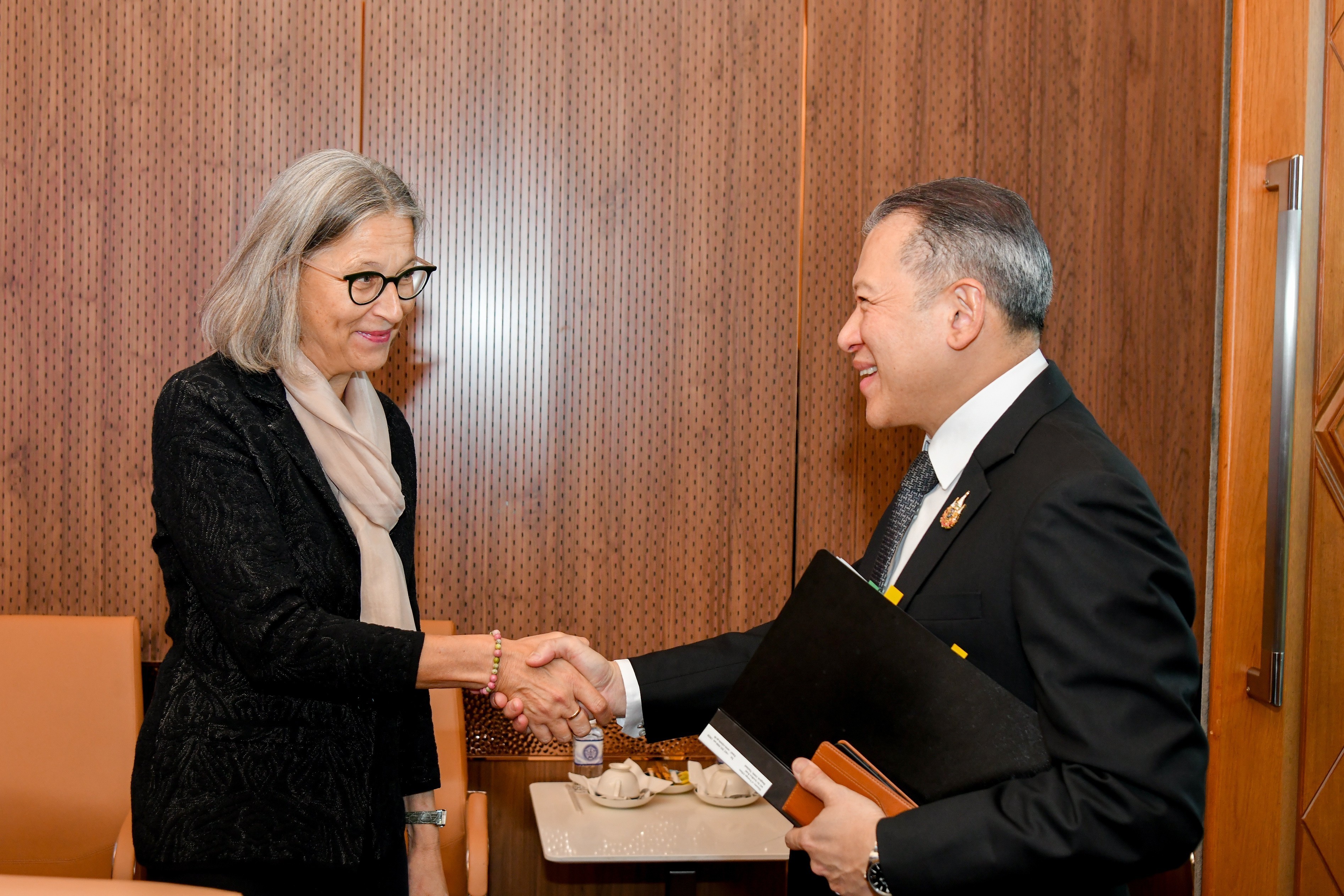
On 22 September 2026, H.E. Mr. Sarun Charoensuwan, Vice Minister for Foreign Affairs, met with H.E. Mrs. Katharina Wieser, Ambassador of Austria to Thailand, to exchange views on multilateral issues and ways to advance cooperation between the two countries. This meeting, focused on strengthening Thailand-Austria relations, is significant because it explicitly reaffirms Thailand’s commitment to multilateral engagement and its ongoing efforts to join the Organisation for Economic Co-operation and Development (OECD). ; see the full statement.
Background
The Ministry of Foreign Affairs’ stated “5S” Foreign Affairs Masterplan, outlined in 2021, prioritizes Strategic Partnerships, Sustainable Development, Security, and Soft Power. Prior to this meeting, Thailand and Austria maintained diplomatic relations, with regular exchanges of officials and discussions on bilateral matters. The Ministry’s press release details a history of engagement, including a meeting with the Indian Ambassador on 8 September 2026 and a meeting with the Bangladeshi Ambassador on 7 September 2026, highlighting a consistent diplomatic strategy. The 20-Year “5S” Foreign Affairs Masterplan emphasizes strengthening relationships with key partners, including those within the European Union.
Analysis
The Thai government’s focus on OECD accession suggests a prioritization of economic modernization and integration into global markets. The discussion on trade and investment underscores Thailand’s efforts to attract foreign capital and diversify its economy. Austria’s election as a Non-Permanent Member of the United Nations Security Council (UNSC) for the 2027–2028 term is a key factor in this engagement, reflecting a shared interest in international security and peacekeeping efforts, as Austria highlighted. The meeting’s emphasis on “protecting civilians in armed conflict” and “addressing challenges posed by emerging technologies” indicates a broader alignment on global security priorities. This suggests a strategic alignment with Austria’s UNSC role and a desire to contribute to international stability.
Implications
For Thailand, the meeting’s outcome could accelerate the OECD accession process, providing access to international standards and potentially attracting further foreign investment. Strengthening ties with Austria could bolster Thailand’s diplomatic standing within the European Union, a strategically important trading partner. The continued dialogue on trade and investment reflects Thailand’s ongoing efforts to promote its exports and attract foreign businesses. Should the visit yield positive results, it could signal a renewed commitment to fostering closer economic ties with European nations.
Outlook
If the visit yields a commitment to further discussions on trade negotiations, the Thai government will likely continue to prioritize the Thailand-EU Free Trade Agreement. Should Austria’s UNSC term continue to align with Thailand’s security interests, the two countries could coordinate efforts on regional security issues. If Thailand successfully completes its OECD accession process, the meeting’s discussions on economic integration would become increasingly relevant.
Conclusion
The meeting between the Thai Vice Minister and the Austrian Ambassador represents a continuation of Thailand’s diplomatic engagement strategy, but the precise impact of the discussions remains unclear. The process of Thailand’s OECD accession continues, and the extent to which this bilateral relationship will shape Thailand’s future foreign policy remains a key question.
Sources & Further Reading
- Official press release
- Foreign ministry source
- Vice Minister for Foreign Affairs meets with the Ambassador of the Republic of India to Thailand (8 Sep 2026)
- Vice Minister for Foreign Affairs meets with Ambassador of the People’s Republic of Bangladesh to Thailand (10 Sep 202)
- Deputy Prime Minister and Minister of Foreign Affairs meets with Ambassador of the State of Israel to Thailand (8 Sep 2026)