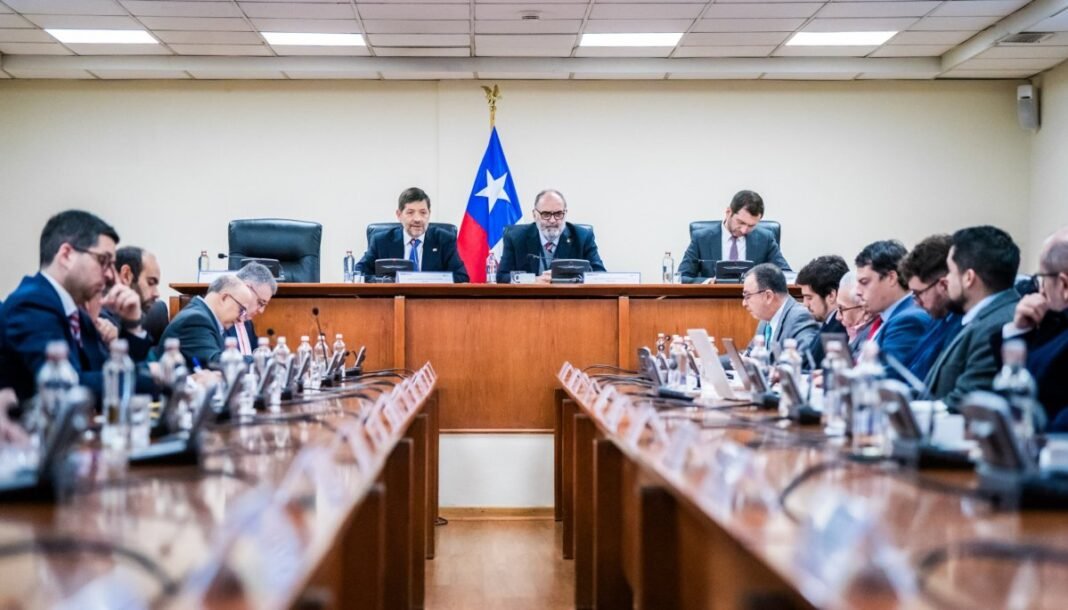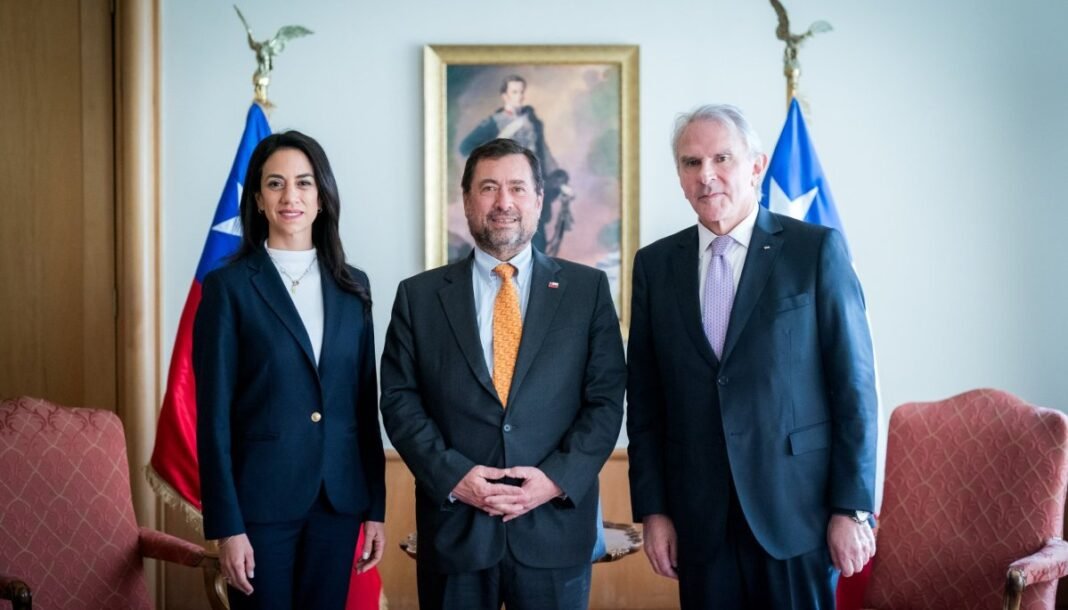
The foreign ministry readout describes The Chilean Minister of the Exterior, Francisco Pérez Mackenna, convened with the President and Vice-President of the Senate, Paulina Núñez and Iván Moreira, respectively, to address the principal issues related to the contingency in foreign relations matters. This meeting, as the Ministry stated, “allows us to know the perspective of the High Chamber and thus be coordinated facing matters that are part of international relations of Chile and, therefore, are state policy of our country.” The statement does not address the specific nature of the “contingency” or the details of the discussion beyond a general reaffirmation of state policy. The Ministry further noted that it seeks “to maintain unity among the various powers of the State, to have one voice, clear and forceful, in foreign policy.”
Background
The Ministry’s actions follow a recent joint declaration with Argentina, published last week, reaffirming that “the legal regime of the Magallanes Strait is the one established by the Treaty of Limits of 1881 and by the Treaty of Peace and Friendship of 1984, instruments that are fully in force and have a definitive character for both States, and that establish the sovereignty of the Republic of Chile over the entire strait.” This reiteration of the 1881 Treaty and the 1984 Treaty – instruments “currently in force” – underscores a key element of Chile’s long-standing claims regarding the Strait. The Ministry’s emphasis on sovereignty aligns with previous statements, as evidenced by a meeting last month between Minister Pérez Mackenna and the Commander-in-Chief of the Navy, Almirante Fernando Cabrera, to “review the joint work of both institutions in defense of sovereignty and cooperation in Antarctic matters.” A prior meeting in September 2026, involving Minister Pérez Mackenna and former President Eduardo Frei, focused on “the challenges of the current global context, highlighting the importance of a state vision in international relations.”
Analysis
The meeting’s stated purpose – addressing a “foreign relations contingency” – remains opaque. The Ministry’s insistence on defending Chile’s sovereignty and maintaining a unified state position suggests a response to ongoing external pressures, though the nature of these pressures is not specified. The reiteration of the 1881 and 1984 Treaties signals a deliberate effort to solidify Chile’s legal position regarding the Strait of Magellan, a particularly sensitive area of contention. The Ministry’s emphasis on “a single voice, clear and forceful” implies a desire to project a united front on international issues, potentially in response to perceived challenges to Chile’s claims. This suggests a prioritization of diplomatic leverage over immediate concessions, reflecting a cautious approach to foreign policy. The statement does not address the potential motivations behind the “contingency” or the specific concerns driving the need for coordinated action.
Implications
The meeting’s outcome – the reaffirmation of existing treaties and the emphasis on state policy – carries significant implications for Chile’s foreign relations. It demonstrates a continued commitment to defending its territorial claims, particularly in the Strait of Magellan, a strategically vital waterway. The Ministry’s stance could potentially heighten tensions with neighboring countries, particularly Argentina, given the ongoing disputes surrounding the Strait. The meeting’s focus on “coordination” suggests an effort to strengthen Chile’s diplomatic engagement with international partners, potentially seeking support for its claims. The event does not address potential impacts on trade or security, nor does it mention any specific alliances or partnerships being considered.
Outlook
Should the visit yield no tangible outcomes regarding the “contingency,” the Ministry will likely continue to emphasize the importance of defending Chile’s sovereignty and maintaining a unified foreign policy approach. If the Ministry successfully secures greater international support for its claims regarding the Strait of Magellan, this would represent a significant diplomatic victory. Should the Ministry’s efforts to coordinate with the Senate prove unsuccessful, this would signal internal divisions within the Chilean government regarding foreign policy strategy. The statement does not address the potential for further diplomatic initiatives or the likelihood of escalating tensions with other nations.
Conclusion
The meeting’s outcome, characterized by reaffirmations rather than breakthroughs, leaves Chile’s foreign relations strategy fundamentally unchanged. The Ministry’s continued emphasis on sovereignty and coordination suggests a deliberate, if somewhat reactive, approach, but the underlying challenges remain unresolved. The question now becomes whether Chile can translate this diplomatic engagement into concrete gains in securing its territorial claims and navigating the complex geopolitical landscape of the Southern Cone.
Sources & Further Reading
- Official press release
- Foreign ministry source
- Jueves 10 de septiembre de 2026 Canciller se reúne con el comandante en jefe de la Armada para revisar el trabajo conjunto en defensa de la soberanía (Unknown Da)
- Martes 8 de septiembre de 2026 Ministro Pérez Mackenna se reúne con el ex Presidente Eduardo Frei para abordar temas de política exterior (Unknown Da)