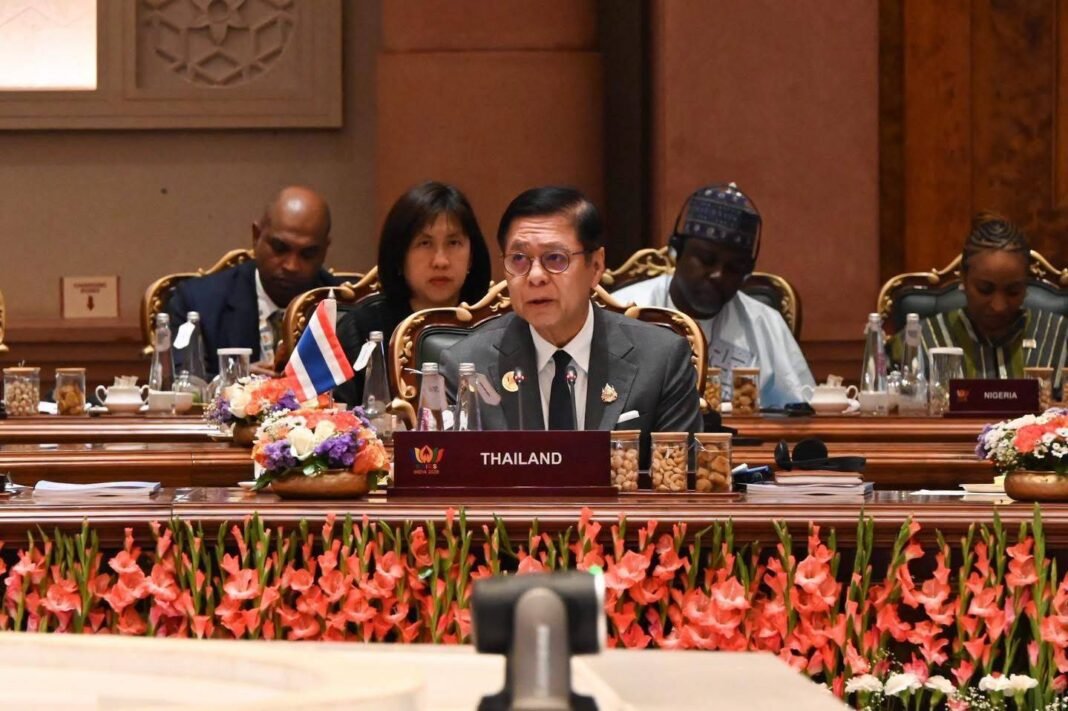
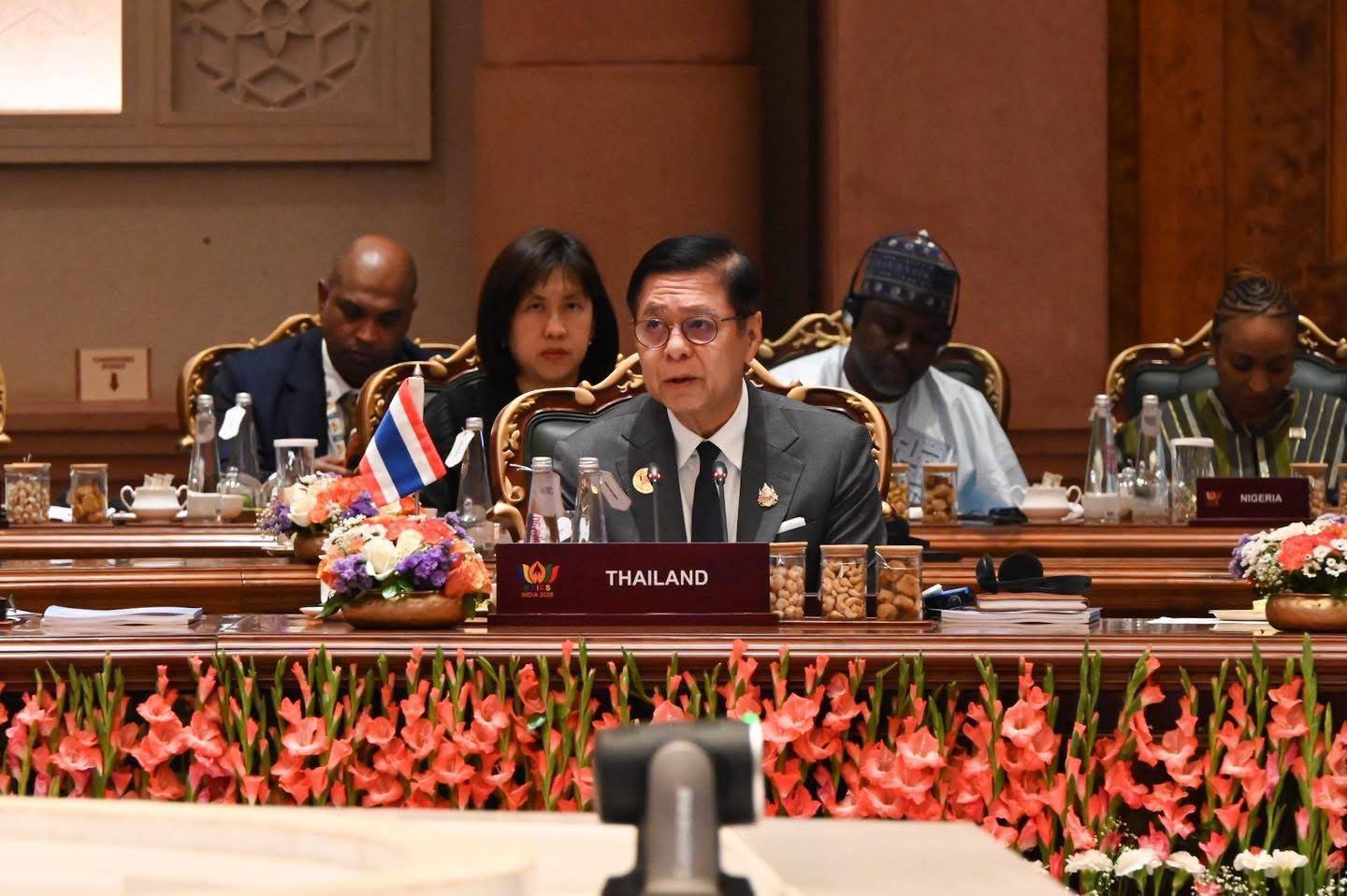
The Deputy Prime Minister and Minister of Foreign Affairs, Sihasak Phuangketkeow, attended the 18th BRICS Leaders’ Summit in New Delhi on 12–13 September 2026 (the statement does not mention the date of the summit). This attendance, at the invitation of Prime Minister Narendra Modi, represents Thailand’s ongoing engagement with the BRICS economic bloc. The purpose, according to the Ministry of Foreign Affairs, was to strengthen Thailand’s partnership with BRICS and demonstrate Thailand’s constructive role on the international stage. The summit’s theme, “Building for Resilience, Innovation, Cooperation and Sustainability,” underscored a global focus on supply chain stability, technological advancement, and sustainable development – areas of increasing importance to Thailand’s economic strategy. — the full statement has further detail.
Background
Thailand’s participation in BRICS aligns with the “5S” Foreign Affairs Masterplan, a 20-year strategy launched in 2025. Thailand became a BRICS partner country in January 2025. The Ministry of Foreign Affairs references previous statements regarding this engagement, including one from 10 September 2026, which outlined Phuangketkeow’s attendance at the summit. A subsequent meeting on 13 September 2026 involved a bilateral discussion with the Minister of Foreign Affairs of Belarus, and another with the Minister of Foreign Affairs of Cuba. These meetings were conducted on the margins of the summit, reflecting the broader diplomatic agenda of the Thai delegation.
Analysis
The Thai government’s focus on trade and investment opportunities within BRICS signals a strategic effort to diversify Thailand’s economic relationships beyond traditional markets. The explicit mention of “emerging technologies, artificial intelligence, risk management, and revised financial architecture” suggests a recognition of evolving global economic dynamics and a desire to participate in innovative sectors. The inclusion of the Thailand-Africa Initiative, alongside access to green finance through the New Development Bank (NDB), indicates a commitment to supporting developing countries – a key tenet of Thailand’s foreign policy. The reference to ASEAN-BRICS cooperation in food security, supply chains, and the digital economy suggests a broader regional strategy, positioning Thailand as a facilitator between these two significant economic blocs. The delegation’s interest in clean energy markets further demonstrates a shift towards sustainable development and aligns with global efforts to mitigate climate change.
Implications
Phuangketkeow’s attendance and the subsequent bilateral meetings hold implications for Thailand’s economic growth and regional influence. Strengthening ties with BRICS member states could unlock access to new markets and investment opportunities, particularly in rapidly growing economies. The focus on technological collaboration could accelerate Thailand’s digital transformation and enhance its competitiveness. However, the statement does not address the geopolitical context of the BRICS summit or the broader implications of BRICS’s evolution. The Thai government’s efforts to bridge ASEAN and BRICS could contribute to greater regional stability and cooperation, particularly in addressing shared challenges such as food security and supply chain vulnerabilities.
Outlook
Should the visit yield concrete agreements on trade and investment, Thailand could experience a significant boost to its export-oriented economy. If the discussions regarding emerging technologies and financial architecture prove fruitful, Thailand could attract foreign investment in high-growth sectors. However, if the summit fails to deliver tangible outcomes, Thailand’s efforts to strengthen its BRICS partnership may be viewed as a strategic misstep. The success of the Thailand-Africa Initiative, particularly in securing access to green finance, will depend on the NDB’s willingness to allocate resources and the capacity of African nations to implement sustainable development projects.
Conclusion
The Deputy Prime Minister’s participation in the BRICS summit highlights Thailand’s ambition to play a more prominent role in the global economy. The question remains whether Thailand can effectively leverage its strategic location and diplomatic skills to translate these ambitions into concrete economic benefits and solidify its position as a key player in the evolving international landscape.
Sources & Further Reading
- Official press release
- Foreign ministry source
- Deputy Prime Minister and Minister of Foreign Affairs to attend the 18th BRICS Summit in New Delhi, the Republic of India (10 Sep 202)
- Deputy Prime Minister and Minister of Foreign Affairs meets with the Minister of Foreign Affairs of Belarus on the sidelines of the BRICS Leaders’ Summit (13 Sep 202)
- Deputy Prime Minister and Minister of Foreign Affairs meets with Minister of Foreign Affairs of Cuba on the sidelines of the BRICS Leaders’ Summit (14 Sep 202)