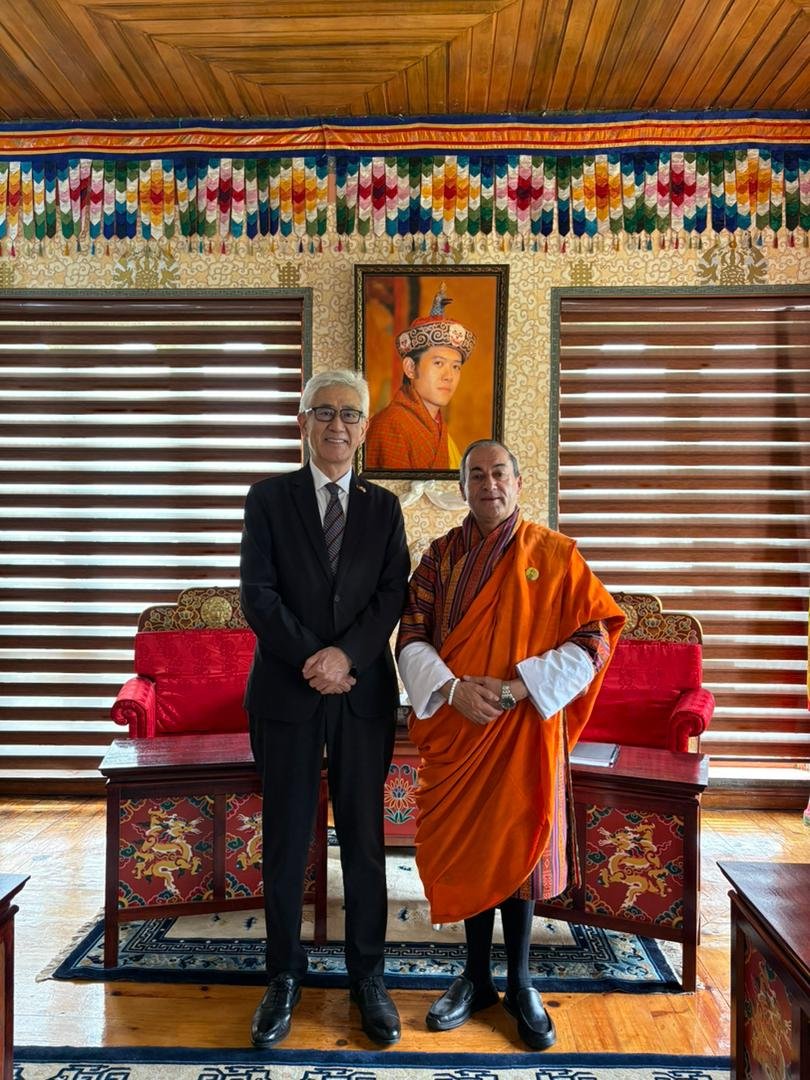
Per the government announcement, Bhutan’s Foreign Minister, Lyonpo D.N. Dhungyel, met with Mr. Tadahiko Konoike, Honorary Consul of Bhutan in the Kinki Region of Japan, earlier this morning. The statement does not mention the precise location of the meeting, only that it occurred “earlier this morning.” This event matters because it represents a formal engagement between the two nations at a level focused on strengthening existing relationships, as outlined by the Ministry of Foreign Affairs.
Background
Mr. Konoike is serving his second term as Honorary Consul of Bhutan in Osaka. This suggests a sustained Japanese interest in facilitating trade and cultural exchange between the two countries. The statement does not detail the nature of the previous meetings or agreements that underpin this relationship, only noting “close and friendly relations.” The release states Mr. Konoike is undertaking his first visit to Bhutan in his capacity as Honorary Consul.
Analysis
The engagement centers on maintaining existing diplomatic ties between Bhutan and Japan. The fact that this is Mr. Konoike’s first visit highlights a potential shift in focus, moving beyond purely ceremonial engagements towards more substantive discussions. This suggests an effort to solidify the logistical infrastructure for trade and consular services, particularly given Mr. Konoike’s role as Honorary Consul. The statement does not address Bhutan’s strategic goals or Japan’s motivations for maintaining this level of engagement.
Implications
This meeting has implications for trade relations between Bhutan and Japan, though the specific terms of any potential agreements remain unspecified. The continued presence of an Honorary Consul demonstrates a commitment to facilitating bilateral economic activity. Should the visit yield further opportunities for cooperation in areas such as tourism or investment – the statement does not address X – it would bolster existing ties. The event also contributes to regional stability by reinforcing diplomatic channels between nations bordering China.
Outlook
If the visit yields positive outcomes regarding trade and consular services, as suggested by the exchange of “views on matters of mutual interest,” it could lead to an increase in bilateral economic activity. Should the meeting not produce concrete results – the statement does not address X – it may signal a continued reliance on existing diplomatic channels for maintaining relations. The Ministry of Foreign Affairs has previously engaged in consultations with Bangladesh, as evidenced by the “Fourth Bhutan-Bangladesh Foreign Office Consultations,” but the extent to which this approach will be replicated remains unclear.
Conclusion
The meeting between Lyonpo Dhungyel and Mr. Konoike represents a quiet step in an ongoing bilateral relationship, one that prioritizes consular support and trade facilitation. The continued need for diplomatic engagement at this level suggests a long-term commitment to fostering cooperation – the statement does not address X – but leaves open the question of whether Bhutan’s foreign policy priorities will shift to accommodate broader regional dynamics.