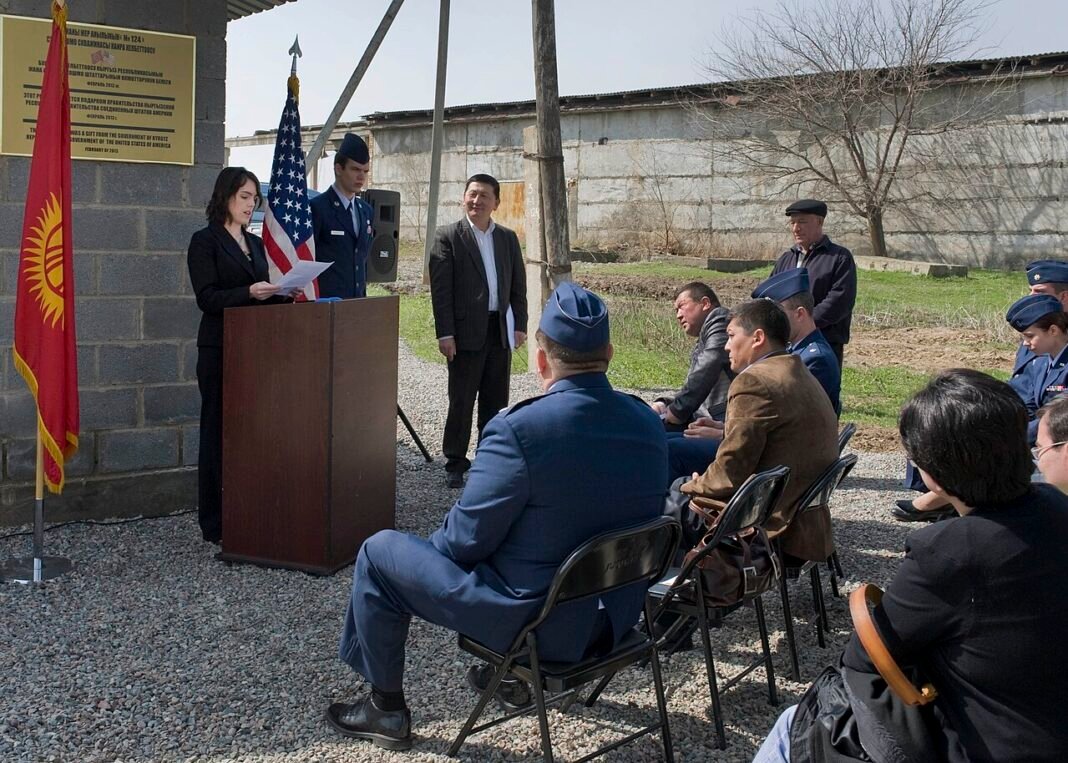
The United States extended congratulations to the Kyrgyz Republic on its thirty-fifth anniversary of independence, as outlined in a press release from Secretary of State Marco Rubio on August 31, 2026. The statement highlighted ongoing efforts to strengthen bilateral relations, with particular emphasis on expanding commercial ties and advancing regional connectivity. This occurred amidst the continuation of engagement through the C5+1 platform – a forum focused on achieving shared economic, energy, and security goals within Central Asia.; see the full statement.

Background
The United States and the Kyrgyz Republic have maintained a bilateral relationship with a focus on broadening cooperation. The statement references the C5+1 platform, indicating an established framework for regional engagement. This platform involves five NATO member states – Bulgaria, Estonia, Latvia, Lithuania, and Poland – plus Georgia, Azerbaijan, Kazakhstan, and Moldova.
Analysis
The US administration’s stated goals – expanding commercial ties and promoting security – suggest a strategic prioritization of the Kyrgyz Republic as a key partner in Central Asia. The emphasis on regional connectivity implies an interest in utilizing Kyrgyz infrastructure for transit routes and economic development. This suggests a desire to counter potential Russian influence within the region, if implemented as described.
The continued focus through the C5+1 platform demonstrates the US commitment to supporting Kyrgyzstan’s efforts toward achieving shared economic, energy, and security goals. The statement does not address the underlying motivations for this engagement or the specific contributions of each participating nation within the framework. If the visit yields tangible outcomes in terms of infrastructure development or security cooperation – as suggested – it would represent a significant step forward.
Implications
The deepening US-Kyrgyz relationship has implications for regional stability and trade dynamics in Central Asia. Increased commercial ties could bolster Kyrgyzstan’s economy, while the C5+1 platform offers a mechanism to address shared security challenges – particularly those related to energy infrastructure and border security. The statement does not address potential geopolitical ramifications of this enhanced partnership.
The continued engagement through the C5+1 forum signals a commitment to promoting regional connectivity and fostering economic development within Central Asia. This could create opportunities for increased trade and investment, but also raises questions about the long-term sustainability of these efforts given broader regional instability. Should the visit yield concrete results in energy security – as suggested – it would bolster US influence.
Outlook
If the United States continues to prioritize its partnership with Kyrgyzstan, further investments in infrastructure and economic development are likely. The statement does not address whether this will include increased financial assistance or technical support. Should the C5+1 platform continue to generate tangible outcomes – particularly in energy security – it could solidify the Kyrgyz Republic’s role as a key transit corridor.
Conclusion
The US administration’s focus on expanding ties with Kyrgyzstan through the C5+1 platform and commercial initiatives leaves open the question of long-term strategic alignment within a region experiencing significant geopolitical shifts. The statement offers no indication of how this partnership will evolve in response to evolving regional dynamics.