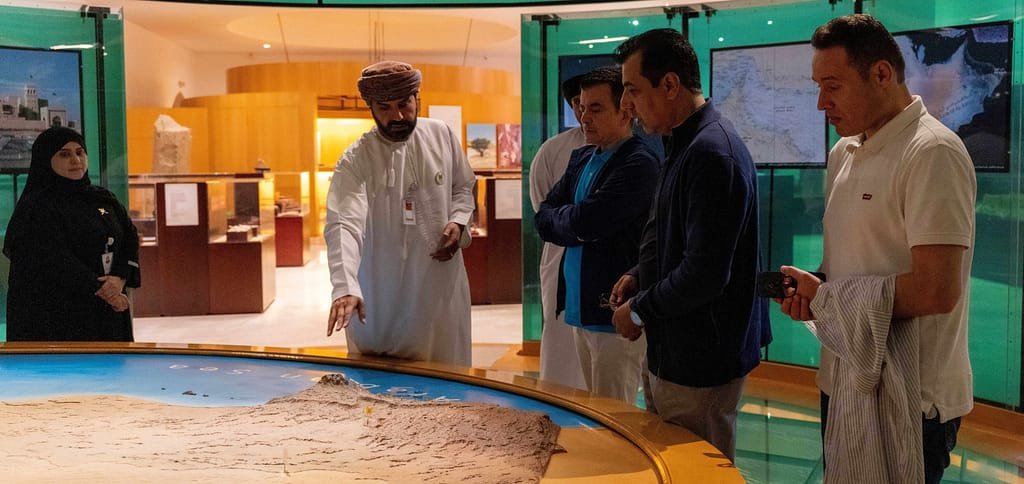
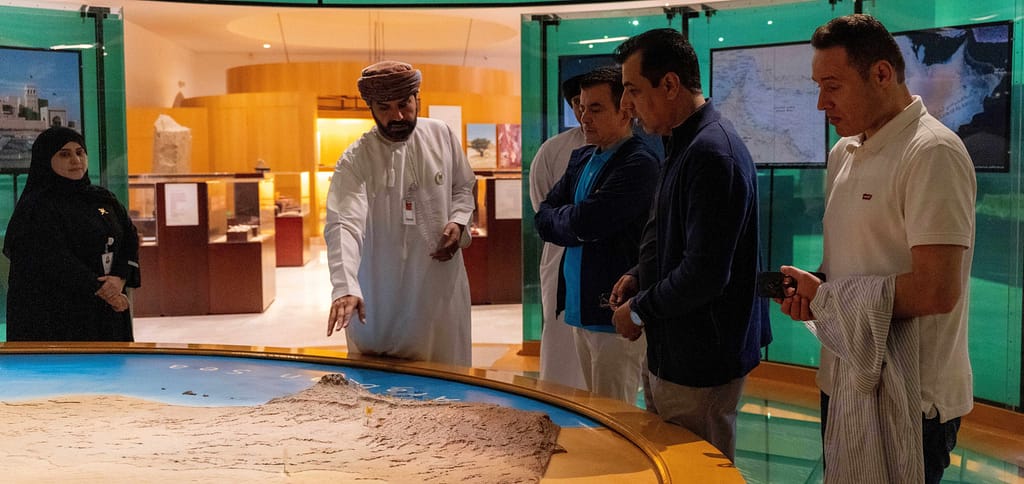
A ministry communiqué confirms that A delegation from the Islamic World Educational, Scientific and Cultural Organization (ICESCO), headed by Dr Salem bin Mohammed Al Malik, visited the Dhofar Governorate on 25 August 2026 to explore a number of tourism, heritage and natural attractions as part of the ‘Bridges of Civilisation’ programme, hosted by Oman until August 28. This focus on Dhofar Governorate matters because the statement frames it as an opportunity for ICESCO to showcase Omani heritage while simultaneously exploring integrated models combining cultural and natural assets for sustainable tourism development – a key component of Oman’s evolving economic strategy.
Background: The ‘Bridges of Civilisation’ programme, launched by ICESCO’s General Secretariat of National Commissions and Conferences, aims to strengthen cultural communication between ICESCO and its Member States. This framework, initiated in 2024, now encompasses a series of visits designed to identify national experiences in preserving heritage and using it to support sustainable tourism development. The programme’s selection of Dhofar Governorate as a focal point reflects a broader effort by the Omani government to diversify its economy beyond hydrocarbons, a strategy increasingly reliant on tourism revenue. A prior meeting between Omani officials and ICESCO representatives in June 2026 reportedly solidified the terms of this engagement.
Analysis: The visit’s emphasis on “integrated models” suggests Oman is attempting to present itself as a leader in culturally-sensitive tourism development – a position that could be attractive to Gulf investors seeking alternative investment opportunities. However, the statement does not address the potential economic risks associated with relying heavily on tourism revenue, particularly given fluctuating global demand and geopolitical instability. The focus on frankincense production methods and its “civilisational significance” highlights Oman’s continued efforts to monetize its historical trade routes – a strategy that could be seen as a subtle attempt to reassert regional influence. If implemented as described, this programme represents a significant shift in ICESCO’s engagement with Member States, moving beyond purely academic collaborations to active participation in national development initiatives. The strategic value of showcasing Dhofar’s unique assets is clear: it allows Oman to demonstrate its commitment to cultural preservation and sustainable tourism.
Implications: For policymakers, the success of this initiative hinges on effectively balancing economic development with the protection of fragile ecological environments – a perennial challenge for nations dependent on natural resources. Should the ‘Bridges of Civilisation’ programme yield positive results in attracting international investment, it could bolster Oman’s ambitions to become a regional tourism hub. The visit also has implications for regional stability, potentially fostering greater cooperation between Gulf states and ICESCO on cultural preservation efforts. A key consideration is the potential impact on trade – particularly frankincense – if sustainable production practices are not rigorously enforced.
Outlook: If the visit yields further opportunities for collaboration with ICESCO, Oman could secure additional funding for heritage conservation projects within Dhofar Governorate. Should the programme be extended beyond August 28th, it would signal a long-term commitment to this tourism development strategy – contingent on demonstrable economic returns and continued support from ICESCO. The statement does not address whether further discussions will occur regarding specific investment mechanisms or potential infrastructure development tied to the showcased heritage sites.
Conclusion: The delegation’s focus on integrating heritage, natural and tourism assets within Dhofar Governorate represents a deliberate effort to reposition Oman as a culturally-rich destination. However, the statement offers no insight into the underlying motivations for this engagement – nor does it acknowledge the inherent challenges in balancing economic development with environmental sustainability.