
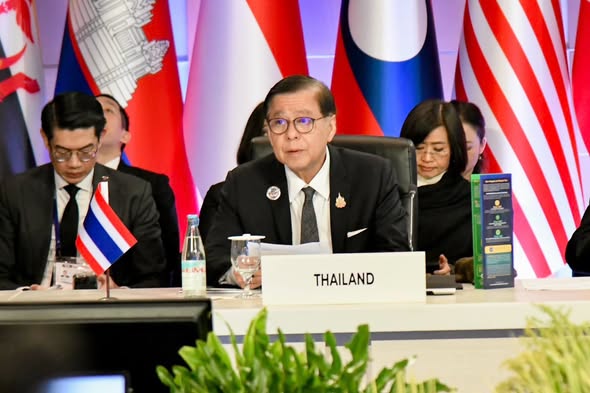
Per the government announcement, On 22 July 2026, Deputy Prime Minister and Minister of Foreign Affairs Sihasak Phuangketkeow participated in the ASEAN Post-Ministerial Conference with Australia in Manila, the Philippines. This event reaffirms a commitment to advancing the ASEAN – Australia Comprehensive Strategic Partnership (CSP) marking its fifth anniversary, driven by shared concerns regarding maritime security and evolving global economic uncertainties. The statement highlights the immediate need to bolster cooperation against transnational crime – specifically online scams – alongside efforts to mitigate risks related to energy and food security.
Background
Australia established Dialogue Relations with ASEAN in 1974, making it the first Dialogue Partner of ASEAN. This longstanding partnership has evolved through various initiatives, including the Aus4ASEAN Futures Initiative. The current conference focuses on building upon this foundation as the CSP nears its fifth anniversary, a milestone recognized by both parties.
Analysis
The Thai Ministry’s actions reflect a strategic prioritization of security concerns within the broader context of regional instability. The explicit reference to maritime security and cybersecurity signals an awareness of vulnerabilities in Southeast Asia’s critical infrastructure and economic flows. Furthermore, the emphasis on combating transnational crime—specifically online scams—indicates a recognition of emerging threats that transcend traditional state boundaries. Promoting economic cooperation through the Partnership for Infrastructure (P4I) demonstrates a proactive approach to addressing geopolitical uncertainties, particularly concerning energy and food security, reflecting a desire to maintain stable trade routes and supply chains.
Implications
This renewed focus on security cooperation holds significant implications for regional stability. Strengthening collaboration against maritime threats could directly impact the South China Sea dynamics and deter potential aggression. The emphasis on cybersecurity is particularly relevant given Australia’s growing concerns about state-sponsored attacks and illicit financial flows. Moreover, the commitment to economic partnerships through P4I presents opportunities for infrastructure development across Southeast Asia, though its success hinges upon navigating competing geopolitical interests and ensuring sustainable investment practices.
Outlook
Should the visit yield further discussions on Myanmar, as indicated by the exchange of views, Thailand’s approach will likely remain cautiously supportive of ASEAN-led efforts towards stability. If Australia continues to prioritize its engagement with Southeast Asia through initiatives like P4I, this could bolster regional economic resilience. However, should diplomatic progress in Myanmar stagnate or worsen, Thailand’s willingness to actively engage on the issue may be tempered by a focus on protecting its own national interests and managing potential spillover effects.
Conclusion
The Manila conference underscores Thailand’s commitment to a strategically calibrated approach to its relationship with Australia. The continuing emphasis on shared security challenges, particularly in maritime domains, suggests a deepening of this partnership – but the extent to which this translates into tangible outcomes remains contingent upon broader geopolitical developments within Southeast Asia.