
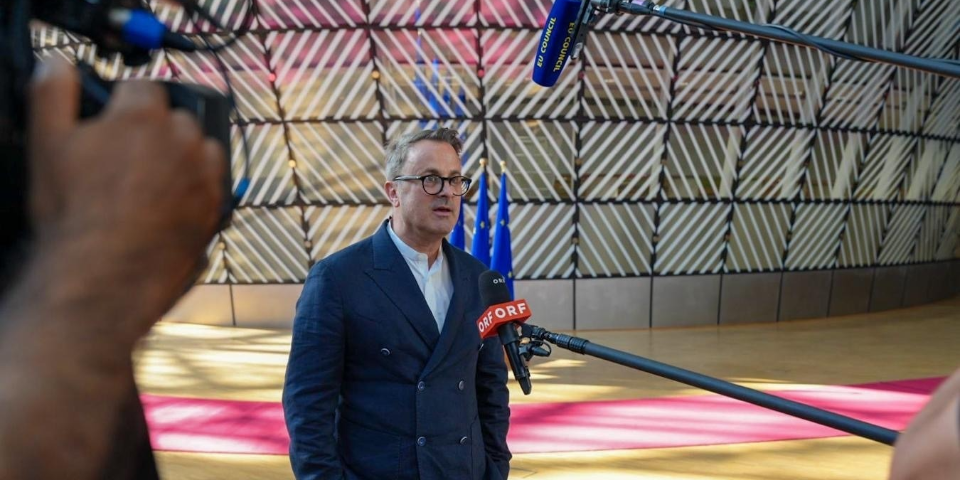
The foreign ministry readout describes The Vice-Premier minister, Xavier Bettel, participated in the European Union (EU) Foreign Affairs Council meeting on July 13th, 2026 in Brussels. The most consequential element of this event was the focus on the ongoing aggression against Ukraine and, specifically, the continued intransigence of Russia. This matters because the statement does not address any concrete steps taken by the EU to alter its approach to the conflict or to exert meaningful pressure on Moscow.
Background
The discussion began with a briefing from Ukraine’s Foreign Minister, Andrii Sybiha. The meeting included an intervention in the name of the Benelux, represented by the Netherlands, currently holding the rotating presidency of the Committee of Ministers. This suggests a coordinated effort within the EU to address key geopolitical concerns. Prior to this CAE meeting, several bilateral discussions focused on strengthening support for Ukraine and maintaining a unified front against Russian aggression.
Analysis
Bettel’s comments regarding Russia reveal a fundamental disagreement within the EU. His assertion that Russia shows “no sign of willingness to end its war of aggression” indicates a lack of confidence in Moscow’s commitment to de-escalation. This suggests a growing frustration amongst European leaders with persistent violations of international law and territorial integrity. The statement does not address the underlying motivations driving Russian policy – primarily, the perceived need to secure strategic interests within its sphere of influence.
Furthermore, Bettel’s call for a common EU position on athletes participating in sports under the Russian flag highlights a tension between humanitarian concerns and broader geopolitical strategy. The intervention concerning the Middle East—Iran, Israel, Palestine, and Lebanon—demonstrates a complex web of competing priorities within the EU foreign policy apparatus. The fragility of the Lebanese mémorandum d’entente is particularly noteworthy.
Implications
The Luxembourg Foreign Minister’s stance has significant implications for EU trade policy. Bettel’s push for an outright ban on trade with Israeli colonies, illegal under international law, signals a potential challenge to the established rules of engagement within the European Union. This could trigger a protracted debate among member states regarding the application of sanctions and the broader implications for relations with Israel. Should the visit yield no immediate results, it underscores the EU’s continued struggle to translate political rhetoric into concrete policy action.
Beyond trade, the meeting highlights vulnerabilities in European security architecture. The emphasis on protecting maritime infrastructure and energy pipelines in the Black Sea reflects a growing concern about instability in this region – an area where the EU’s influence remains limited. The continued deterioration of the humanitarian situation in Gaza, coupled with the expansion of Israeli settlements, further complicates the geopolitical landscape.
Outlook
If the visit yields a commitment to organize a vote within the European Parliament on a trade embargo, this would represent a significant step forward. Should the EU fail to act decisively, as appears likely given the stated need for a “concrete proposal” from the Commission, the situation risks further exacerbating tensions with Israel and undermining the credibility of the European Union’s foreign policy.
Conclusion
The Luxembourg Foreign Minister’s intervention ultimately raises questions about the EU’s capacity to translate diplomatic pressure into tangible action. The unresolved issue of Israeli settlements remains a persistent obstacle to broader EU efforts to promote stability and human rights in the region – a challenge that demands immediate attention.