
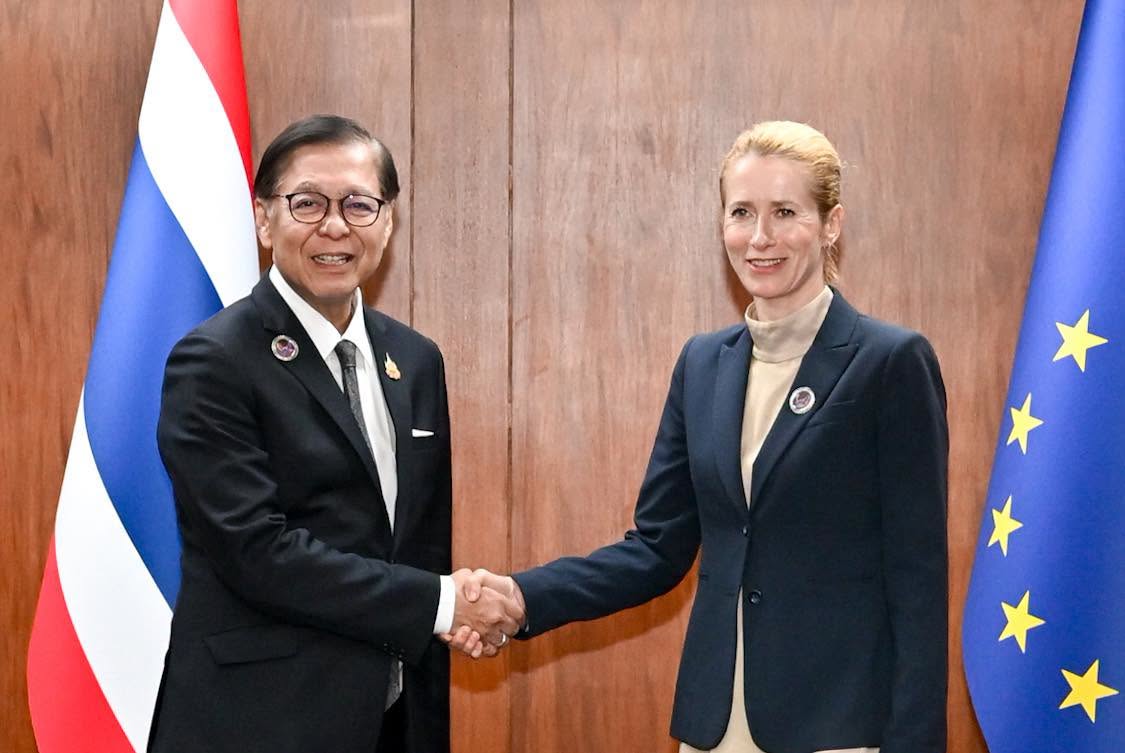
Reporting in a government statement, The Deputy Prime Minister and Minister of Foreign Affairs, Mr. Sihasak Phuangketkeow, engaged in a bilateral meeting with the High Representative of the Union for Foreign Affairs and Security Policy and Vice-President of the European Commission, Ms. Kaja Kallas, on 22 July 2026 (the statement does not mention the location beyond the ASEAN meetings in Manila). This engagement highlights a deliberate effort by Thailand to deepen its relationship with the EU, framed as advancing towards a “strategic partnership” – a designation that carries significant implications given the current global landscape. The core purpose of this meeting, according to the statement, is to explore ways to advance Thailand – EU relations amid growing global challenges.
Background
The meeting occurred on the sidelines of the 59th ASEAN Foreign Ministers’ Meeting and Related Meetings in Manila. This event serves as a recurring forum for Southeast Asian nations to engage with key international partners, including the European Union. The statement notes that discussions covered security and strategic cooperation, people-to-people connectivity, and reaffirmed commitment towards concluding the Thailand–EU Free Trade Agreement (FTA) negotiations at the earliest opportunity. Prior to this meeting, bilateral talks between Thai and EU officials have been ongoing, though details of specific agreements or sticking points remain undisclosed by the Ministry of Foreign Affairs. The statement does not mention the timeline for FTA completion.
Analysis
The stated aim of a “strategic partnership” suggests a shift in Thailand’s foreign policy orientation, moving beyond traditional engagement with Western powers to one predicated on shared strategic interests – particularly concerning security. This signals an acknowledgment of intensifying global instability and the need for stronger alliances. The inclusion of ‘security and strategic cooperation’ points towards potential areas of collaboration including defense technology or intelligence sharing; however, the statement does not elaborate on specifics. The EU’s approval of the visa cascade scheme represents a tangible benefit for Thai citizens, potentially boosting tourism and facilitating greater cultural exchange – a key element in the “people-to-people connectivity” discussion. The simultaneous focus on regional issues, specifically Myanmar and Thailand – Cambodia border tensions, indicates that Thailand views these challenges as intertwined with its broader strategic goals. The Ministry of Foreign Affairs is signalling a renewed emphasis on proactive diplomacy regarding sensitive regional matters.
Implications
For policymakers in Bangkok, the pursuit of a “strategic partnership” represents an ambition to elevate Thailand’s geopolitical standing and secure preferential access to European markets through the FTA. The visa cascade scheme could bolster Thailand’s tourism sector, a critical component of the national economy – if its implementation proves effective. The engagement on regional issues underscores Thailand’s commitment to maintaining stability in Southeast Asia, though the lack of detail regarding specific actions raises questions about the extent of Thai influence. Should the EU continue to prioritize cooperation with Thailand, it could provide much-needed support for Bangkok’s efforts to manage complex border disputes and navigate the ongoing instability within Myanmar.
Outlook
If the visit yields progress on the FTA negotiations, as the statement suggests, this would represent a significant step toward economic integration. Should the EU’s approval of the visa cascade scheme translate into increased tourist arrivals and sustained economic growth in Thailand – contingent upon successful implementation – it could bolster public support for the government’s foreign policy initiatives. If the situation in Myanmar remains unresolved, or if tensions with Cambodia escalate further, Thailand will likely seek continued engagement with the EU to leverage diplomatic pressure and secure assistance. The statement does not address whether Thailand intends to seek increased military cooperation with the European Union.
Conclusion
The meeting between Mr. Phuangketkeow and Ms. Kallas marks a deliberate effort by Thailand to reposition itself within the global order; however, the lack of concrete commitments regarding security or trade leaves open questions about the substance of this “strategic partnership.” The Ministry of Foreign Affairs’ continued emphasis on regional stability suggests that Thailand remains committed to navigating complex geopolitical challenges – but the path forward remains unclear.