
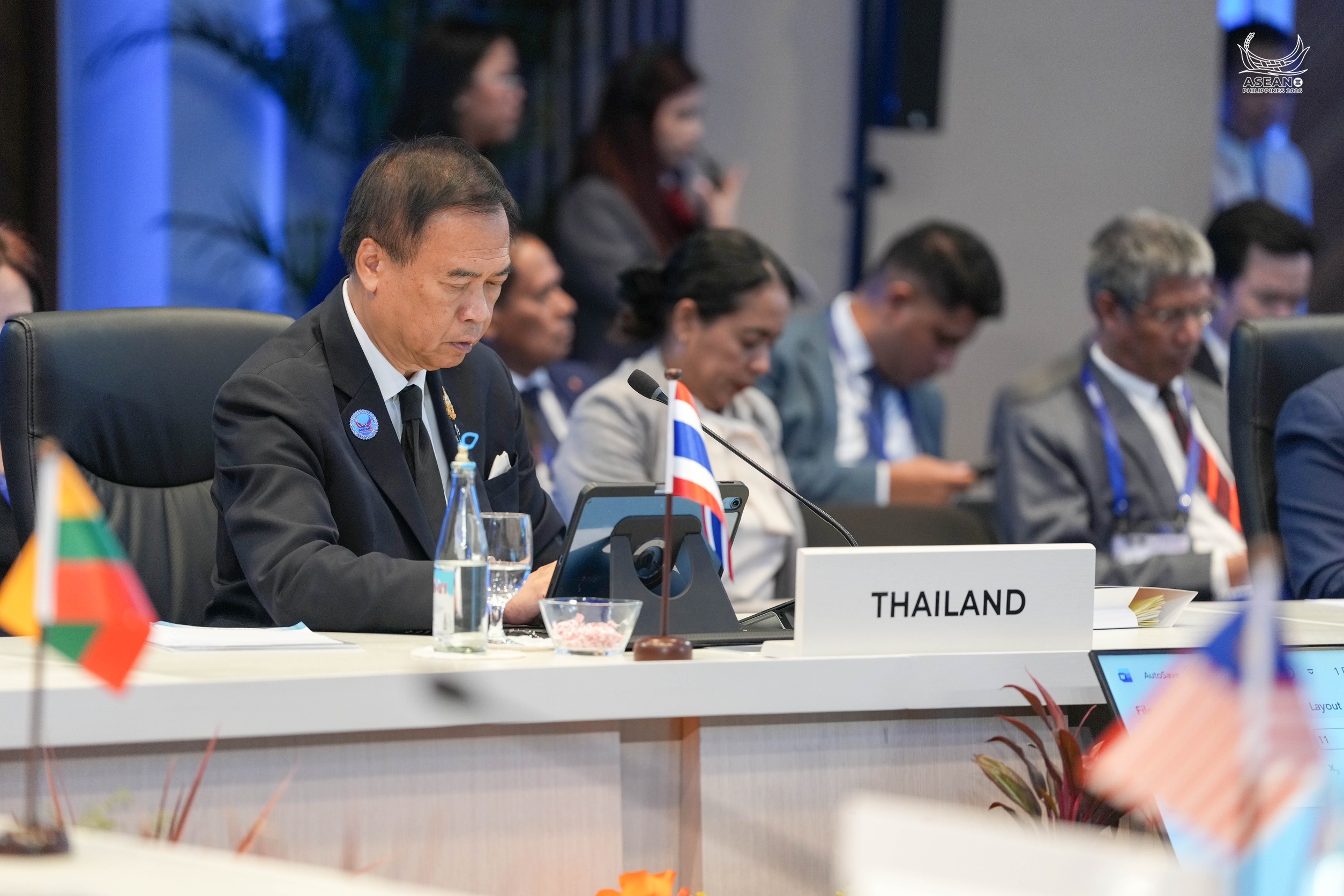
A ministry communiqué confirms that The most immediate consequence of Vice Minister Vijavat Isarabhakdi’s attendance at the Southeast Asia Nuclear Weapon-Free Zone Commission meeting in Manila on 20 July 2026 is the reaffirmation of ASEAN’s longstanding commitment to maintaining a nuclear-free zone within its borders. This statement, delivered by Thailand’s representative, underscores a strategic priority given the evolving international security landscape – a landscape increasingly characterized by uncertainties regarding global power dynamics and proliferation risks. The significance lies in Thailand’s explicit articulation of this commitment, occurring concurrently with the 59th ASEAN Foreign Ministers’ Meeting, highlighting a deliberate effort to project stability within Southeast Asia.
Background
Thailand’s participation in the SEANWFZ Commission is rooted in the country’s “5S” Foreign Affairs Masterplan – a 20-year strategy prioritizing Stability, Security, Sustainability, Synergy, and Service. This masterplan, as outlined within the Ministry of Foreign Affairs’ published materials (the statement does not specify details), reflects a broader governmental commitment to regional security architecture. The meeting itself is convened annually by the Southeast Asia Nuclear Weapon-Free Zone, an organization established in 1995 under the Treaty of Southeast Asia Nuclear Weapon-Free Zone. This treaty, and its associated Protocol – currently under discussion – represent a key element of ASEAN’s broader efforts towards non-proliferation within the region.
Analysis
The Thai government’s emphasis on nuclear disarmament and non-proliferation amidst “growing uncertainties in the international security environment” suggests a potential shift in its foreign policy calculus. The statement does not address whether this reflects a reassessment of existing alliances or partnerships, nor does it detail any specific changes to Thailand’s defense posture. However, the timing – coinciding with the ASEAN Foreign Ministers’ Meeting – implies a coordinated response to broader regional security concerns, likely prompted by ongoing geopolitical tensions. This engagement also highlights a desire for influence within discussions surrounding nuclear proliferation, particularly given Thailand’s location and relationships.
Implications
For policymakers, Thailand’s renewed focus on nuclear disarmament carries implications for regional stability. Should the Protocol to the Treaty of Southeast Asia Nuclear Weapon-Free Zone be signed – a process currently underway as indicated by the statement – it would represent a significant step towards strengthening ASEAN’s collective security posture. This could, in turn, influence broader diplomatic efforts within Southeast Asia and potentially impact relationships with major powers possessing nuclear capabilities. The exchange of views on cooperation with other Nuclear Weapon-Free Zones signals an intention to engage proactively in global non-proliferation initiatives.
Outlook
If the signing of the Protocol proceeds without significant roadblocks, as the statement suggests, Thailand’s commitment will be bolstered. Should the discussions regarding strengthening cooperation with other Nuclear Weapon-Free Zones yield tangible outcomes – specifically, increased collaborative efforts in verification and monitoring – it would represent a positive development for global disarmament objectives. Conversely, if negotiations on the Protocol falter due to disagreements among member states or external pressures, Thailand’s commitment may be tested, potentially leading to a reassessment of its regional security strategy.
Conclusion
The participation in this commission demonstrates Thailand’s continued engagement with critical regional security issues. However, the statement does not provide insight into whether Thailand is anticipating or responding to specific threats – nor does it detail any long-term strategies regarding its own national security. The ongoing discussions surrounding the Protocol remain a key point of observation for policymakers.