
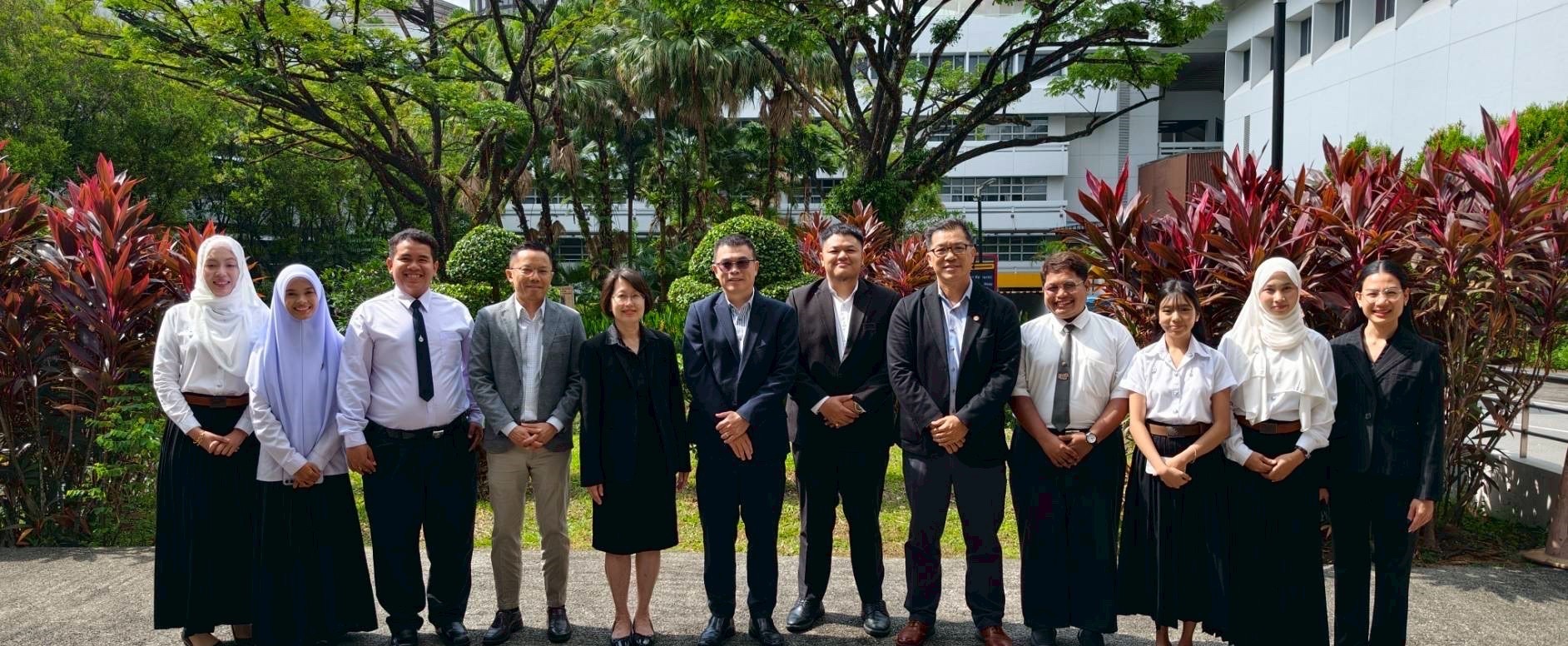
Reporting in a government statement, The Ministry of Foreign Affairs dispatched Assistant Permanent Secretary Ms. Marinee Suwanmoli and six Thai university students on a study visit program to Singapore (21 Jul 2026) focused on “Understanding Multiculturalism.” This initiative, led by the International Security Unit, highlights Singapore’s prioritization of social cohesion as a key component of its foreign policy approach – a factor the statement does not address. The delegation’s engagement with institutions like the Ministry of Culture and the People’s Association underscores this focus.
Background
The program, running from 15 – 17 July 2026, is framed within the broader “5S Foreign Affairs Masterplan,” a 20-year strategic initiative. The visit reflects ongoing efforts to enhance participants’ understanding of multiculturalism and Singapore’s policies in fostering harmonious coexistence. This includes meetings with representatives from key institutions such as the S. Rajaratnam School of International Studies (RSIS) and Nanyang Technological University, alongside private agencies like the People’s Association (PA). The Harmony in Diversity Gallery visit provides a concrete illustration of Singapore’s approach to interfaith understanding.
Analysis
The delegation’s engagement with these diverse entities suggests a deliberate effort by Thailand to examine alternative models for managing social complexity. The focus on Singapore reflects a potential shift in the Ministry’s foreign policy priorities, prioritizing approaches to social stability and governance – an area where Thailand faces ongoing challenges regarding regional identity and internal divisions. This initiative is predicated on the assumption that lessons can be learned from Singapore’s successful implementation of multicultural policies; however, the statement does not address whether this learning will translate into specific reforms within Thailand.
Implications
The study visit carries implications for Thailand’s broader diplomatic strategy. If implemented as described, it could signal a deepening engagement with Singapore on issues of governance and social policy – potentially impacting bilateral relations beyond traditional trade and security concerns. The focus on multiculturalism could also influence Thailand’s approach to regional cooperation within ASEAN, particularly regarding minority rights and interfaith dialogue. Furthermore, the delegation’s discussions with the Ambassador of Thailand to Singapore offer an opportunity to refine Thailand’s messaging on these issues internationally.
Outlook
Should the visit yield insights into operationalizing a similar approach within Thailand, it would require significant investment in institutional capacity building and potentially require adjustments to existing policies concerning ethnic relations. If the Thai government seeks to replicate Singapore’s model, it must acknowledge the fundamental differences between the two societies – particularly regarding historical context and political structures. The delegation’s discussion with the Ambassador could provide a framework for future engagement, but achieving comparable outcomes remains conditional on addressing Thailand’s own complex internal dynamics.
Conclusion
The dispatch of this youth delegation to Singapore raises fundamental questions regarding the Ministry’s long-term strategy for managing social cohesion within Thailand; a goal that has yet to be fully articulated in public policy.