
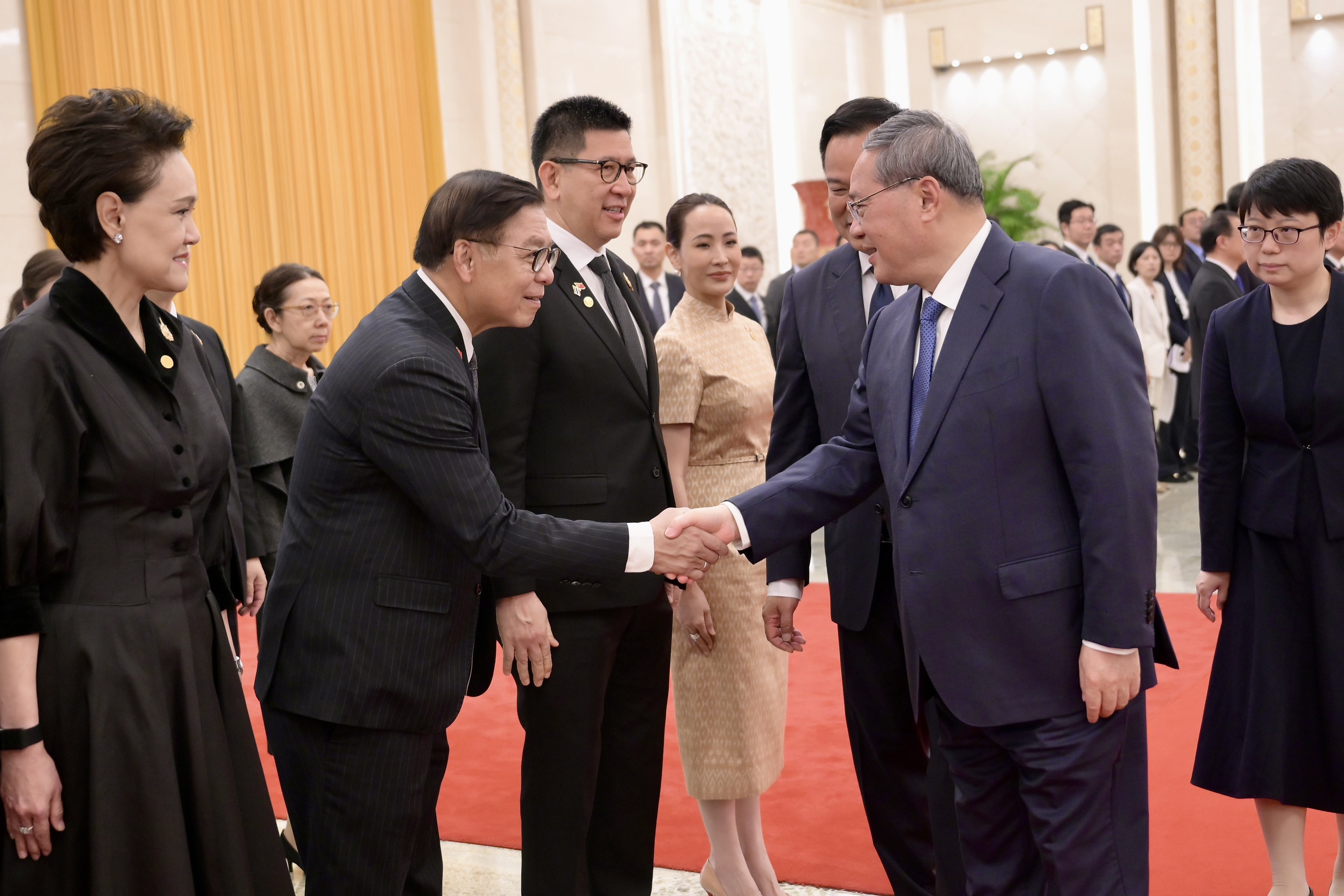
The official readout frames the trip as During 16-20 July 2026, Deputy Prime Minister and Minister of Foreign Affairs, H.E. Mr. Sihasak Phuangketkeow, accompanied Prime Minister Anutin Charnvirakul on an official visit to the People’s Republic of China at the invitation of H.E. Mr. Li Qiang, Premier of the State Council. This marked the Prime Minister’s first high-level visit to Beijing and the 51st year of diplomatic relations between the two nations—a fact that both governments explicitly cited as a foundation for strengthening their “Comprehensive Strategic Cooperative Partnership.” The significance lies in the deliberate timing coinciding with China’s own leadership transition and signaling a deepening commitment by Thailand to prioritize its relationship with Beijing despite broader regional uncertainties.
Background
Thailand’s ‘5S’ Foreign Affairs Masterplan, unveiled in 2018, prioritizes Security, Strategy, Stability, Sustainability, and Synergy. This visit represents a tangible component of this plan, built upon a longstanding relationship now entering its 51st year. Prior meetings between the Thai and Chinese delegations have focused on economic cooperation – particularly within the framework of the Mekong-Lancang Cooperation (MLC) – but this trip marks a shift toward more direct engagement in security matters, a key pillar of the ‘5S’ strategy.
Analysis
The establishment of a Thailand-China 2+2 Ministerial Dialogue—co-chaired by the Foreign Affairs and Defence Ministers—indicates a growing recognition of shared security concerns. Specifically, the pledge to step up cooperation against transnational crimes, with a targeted focus on online scam syndicates, reflects a shared vulnerability to illicit activities originating in China and impacting Thai citizens. This signals a move beyond traditional trade-focused diplomacy towards a more robust strategic partnership. The agreement to enhance practical cooperation across economy, connectivity, supply chain resilience, STI, AI, clean energy, and the digital economy demonstrates a broadening scope of collaboration—an attempt to diversify Thailand’s economic reliance. The simultaneous signing of 15 key agreements underscores Beijing’s desire to leverage Thailand’s strategic location within Southeast Asia as part of its Belt and Road Initiative.
Implications
For policymakers in Bangkok, the visit represents a calculated gamble—a deepening alignment with China amidst increasing pressure from Washington regarding trade imbalances and regional security dynamics. Regionally, the 2+2 dialogue elevates China’s influence within Southeast Asian security architecture. The intensified cooperation against transnational crime could impact Thailand’s relationships with other ASEAN members who also grapple with similar threats. Furthermore, expanded investment and economic ties—particularly with Sichuan – suggests a broader ambition to integrate Thai businesses into China’s expanding supply chains, potentially impacting regional trade flows.
Outlook
Should the visit yield sustained progress in security cooperation, Thailand will have significantly altered its strategic positioning. If the 2+2 dialogue proves effective in coordinating intelligence sharing and law enforcement efforts, it could create a more resilient approach to combating cybercrime and other transnational threats. Should China continue to prioritize investment within Thailand’s economic development framework—particularly through initiatives like the Investment and Economic Forum in Chengdu – this would enhance Thailand’s ability to mitigate global supply chain disruptions. However, should the alignment with China prove overly reliant on Beijing’s geopolitical agenda, it risks isolating Thailand from its traditional Western allies.
Conclusion
The joint statement outlining a “Thailand-China Community with a Shared Future for Shared Prosperity” offers a compelling vision—but leaves open the critical question of how this ambitious partnership will translate into concrete benefits for Thai citizens and secure Thailand’s long-term strategic interests in an increasingly complex international environment.