
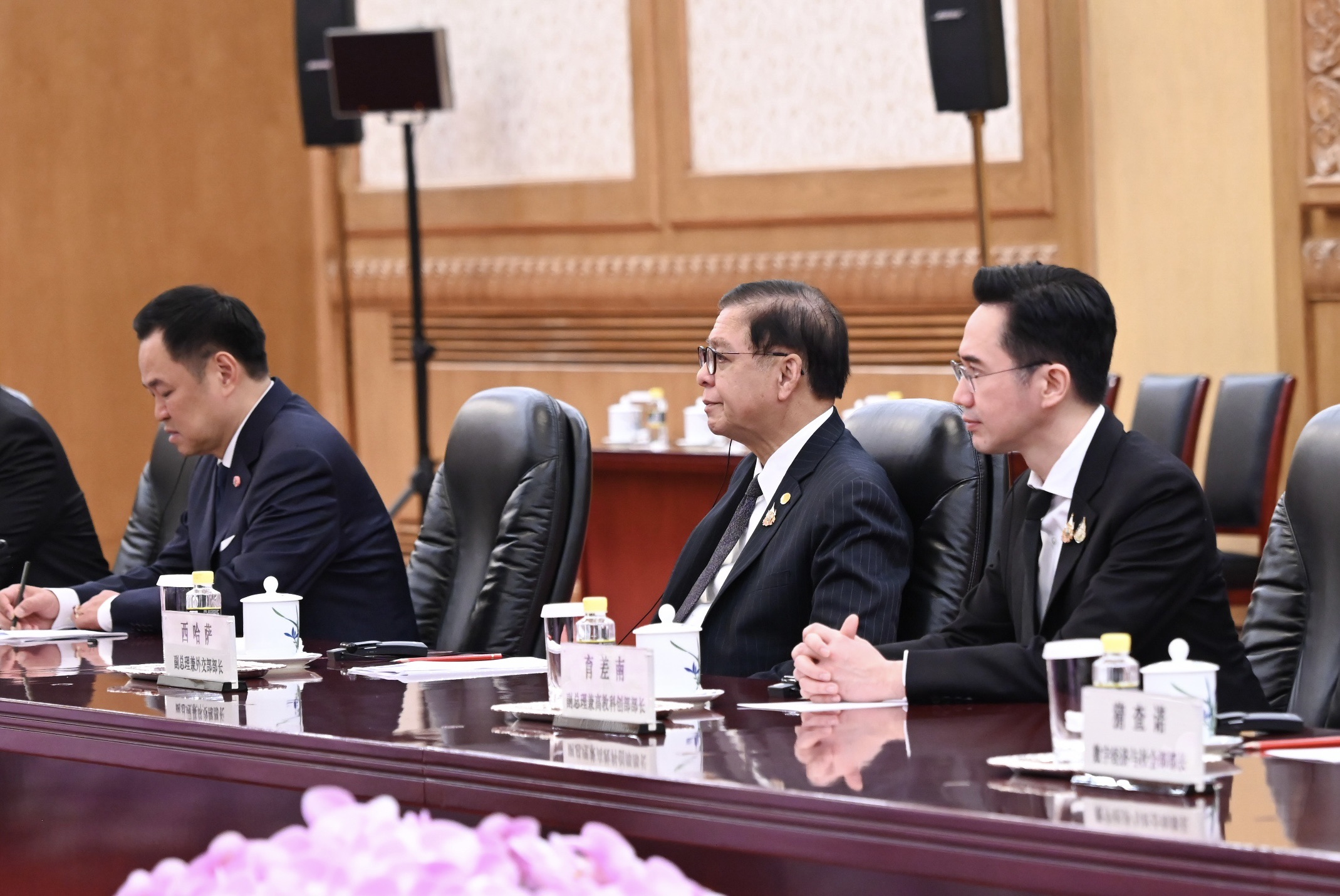
The foreign ministry readout describes On 20 July 2026, Deputy Prime Minister and Minister of Foreign Affairs Sihasak Phuangketkeow attended the full bilateral meeting between Prime Minister Anutin Charnvirakul and Premier Li Qiang in Beijing. This event marked a significant step toward strengthening Thailand-China relations, confirmed by an agreement to establish a Thailand–China 2+2 Ministerial Dialogue on Security. The creation of this dialogue – co-chaired by the Ministers of Foreign Affairs and Defence – underscores a shift in Thai foreign policy priorities. The move reflects a growing emphasis on security cooperation with China amid evolving regional dynamics, particularly regarding transnational crime.
Background
The announcement follows 20 years of development under the ‘5S’ Foreign Affairs Masterplan, a framework prioritizing Stability, Sovereignty, Security, Synergy, and Sustainability. Previous bilateral meetings between Thai and Chinese leaders have consistently focused on deepening economic ties and broadening cooperation across various sectors. The existing Thailand–China Comprehensive Strategic Cooperative Partnership has been cultivated through numerous agreements and joint projects. This latest development builds upon a foundation of diplomatic engagement established over decades.
Analysis
The establishment of the 2+2 dialogue represents a deliberate move by Thailand to integrate China more deeply into its security calculus. The agreement reflects a potential acknowledgment of strategic limitations within existing ASEAN frameworks, particularly regarding enforcement capabilities against sophisticated transnational crime networks like online scam operations. The simultaneous signing of 15 key agreements and MoUs highlights the breadth of cooperation being pursued – encompassing trade, investment, agriculture, public health, science, technology, anti-fraud, education, and media. This expansion indicates a desire to leverage China’s economic power and technological advancements across multiple sectors. The inclusion of artificial intelligence (AI) and clean energy signals Thailand’s ambition to participate in global innovation trends with Chinese support.
Implications
For Thailand, the 2+2 dialogue presents both opportunities and potential risks. It could enhance Thailand’s ability to combat transnational crime, particularly cybercrime, offering a strategic partner in intelligence sharing and law enforcement. However, it also raises questions about alignment with ASEAN’s broader security architecture. The deepening relationship with China potentially diminishes Thailand’s traditional alliance with the United States, a dynamic that requires careful management within the Southeast Asian context. Furthermore, increased economic cooperation with China could exacerbate existing trade imbalances and raise concerns regarding dependence on a single major trading partner.
Outlook
Should the visit yield further tangible outcomes in combating transnational crime, Thailand will have demonstrated a practical benefit from this security dialogue. If the commitment to promoting cooperation in emerging industries – AI, clean energy, digital economy – is sustained through concrete projects and joint research initiatives, it could provide significant economic advantages for Thailand. However, if the dialogue primarily serves as a platform for China’s strategic influence without demonstrable benefits for Thailand, it risks reinforcing perceptions of unequal partnerships.
Conclusion
The formalization of the Thailand–China 2+2 ministerial dialogue marks a pivotal moment in Thai foreign policy. The statement does not address whether this new mechanism will reshape Thailand’s broader relationships within ASEAN or its strategic orientation towards major powers, leaving open the central question of how Thailand intends to balance these competing interests.