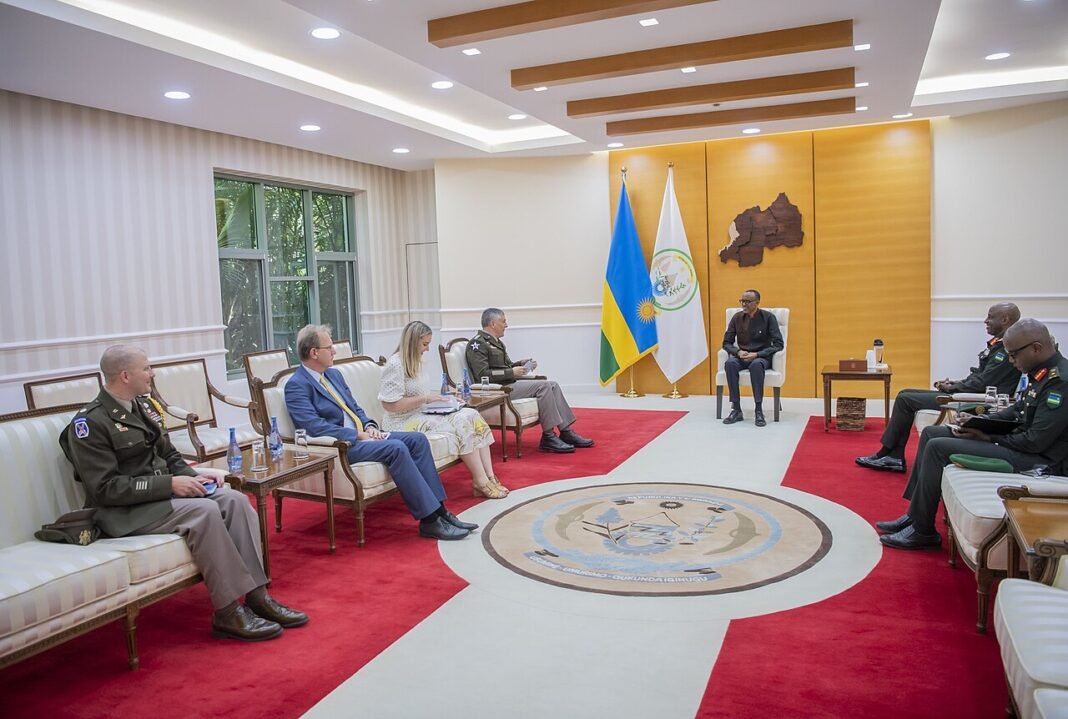
The United States facilitated this week’s sixth meeting of the Joint Security Coordination Mechanism (JSCM) between the Democratic Republic of the Congo (DRC) and Rwanda, a gathering intended to bolster monitoring of the Washington Accords – an agreement meant to halt cross-border violence and support the reintegration of former combatants. The statement identifies the core issue: the continued lack of verifiable implementation of this accords, something underscored by the meeting’s focus on two new initiatives and the request for U.S. feedback. This underscores a critical gap in the peace process – the absence of robust mechanisms to confirm that parties are adhering to their commitments.; see the full statement.

Background
The JSCM was established as part of the peace agreement between the DRC and Rwanda, designed to coordinate security efforts and address the root causes of instability. The statement details a timeline marked by regular meetings, beginning with initial discussions in 2019. This sixth meeting follows previous gatherings aimed at strengthening monitoring and verification – a process that has repeatedly stalled due to disagreements over access and reporting. The presence of Qatar, Togo (as African Union mediator), and the African Union Commission highlights the international engagement supporting this fragile effort.
Analysis
The DRC’s presentation of its Disarmament, Demobilization, and Reintegration (DDR) Plan for the Forces Démocratiques de Libération du Rwanda (FDLR) represents a key element of this process. The request for U.S. feedback indicates the Congolese government’s recognition that external validation is crucial for gaining credibility and securing international support. Simultaneously, the virtual session with MONUSCO – the United Nations Organization Stabilization Mission in the DRC – demonstrates an attempt to leverage existing operational experience within the region, a strategy likely driven by the limitations of relying solely on bilateral agreements. This suggests a prioritization of pragmatic solutions over fundamental shifts in the underlying political dynamics.
Implications
The planned trilateral planning conference in October 2026, culminating in a revised Operations Order, represents an effort to translate these discussions into concrete action. Should this revised Operations Order be successfully implemented, it could provide a framework for improved coordination between the DRC military and Rwandan forces. However, the continued reliance on agreements between two states with divergent interests – particularly given the FDLR’s origins – carries inherent risks. The commitment to reconvening in Geneva on September 16-17 signals a continued U.S. investment in this process, but does not address the broader implications for regional stability or trade/security considerations stemming from ongoing conflict.
Outlook
If the October planning conference yields a revised Operations Order, and if the United States provides constructive feedback as requested, it could represent a step forward. However, should the visit yield no substantial changes to the monitoring framework, or if disagreements persist regarding access and reporting, the JSCM risks becoming another forum for unproductive dialogue. The agreement to reconvene in Geneva suggests a cautious optimism – a willingness to continue engaging despite the significant challenges posed by the DRC’s complex security landscape.
Conclusion
The sixth meeting of the JSCM underscores the persistent difficulties in achieving verifiable peace in eastern Congo. The incremental steps taken, coupled with ongoing international support, do not fundamentally address the core issue: the lack of independent verification and enforcement mechanisms to ensure compliance with security agreements. The continued need for external mediation raises a critical question regarding the DRC’s capacity to sustainably resolve its internal conflicts.