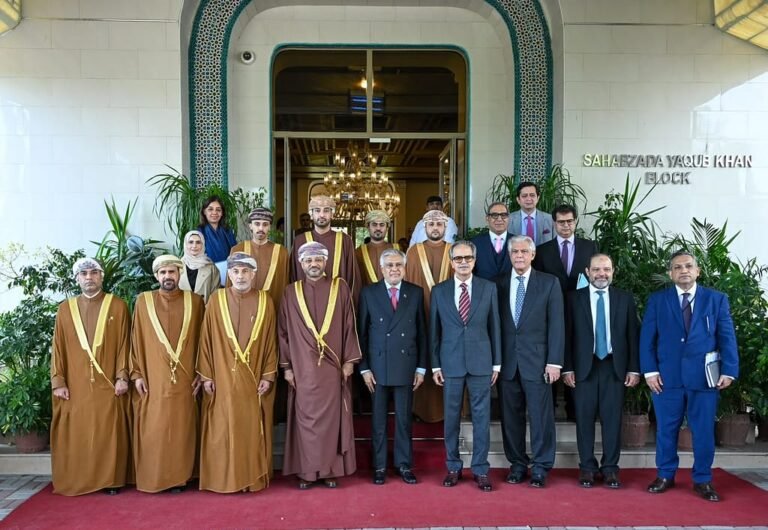
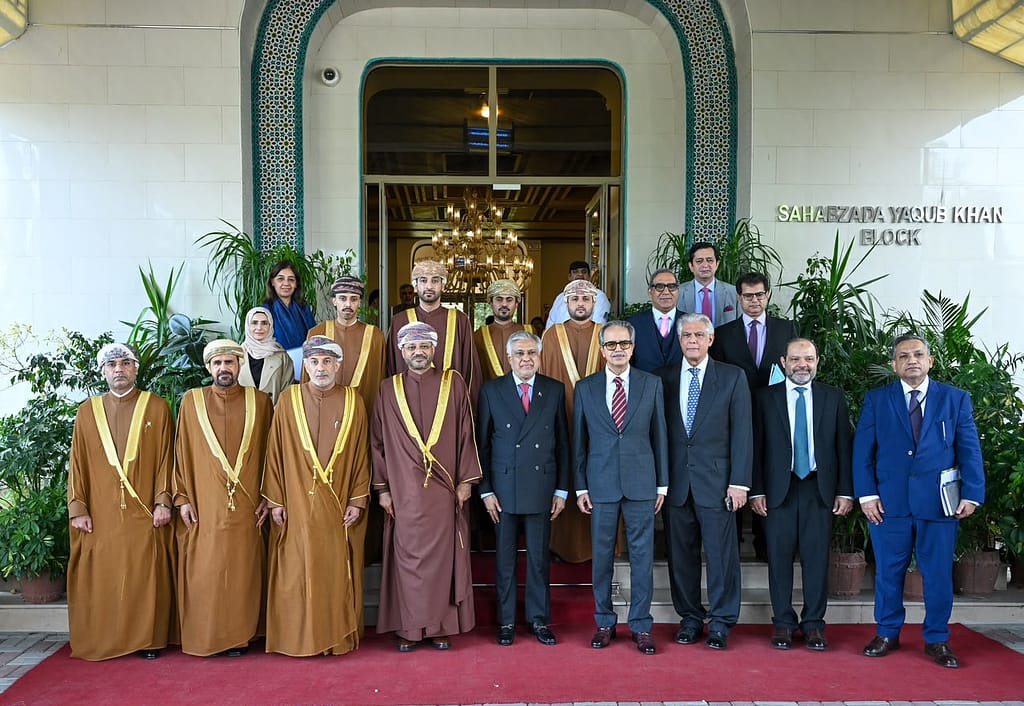
Per the government announcement, Islamabad, 14 October 2026 – A joint ministerial committee meeting concluded between Oman and Pakistan, focused on reviewing relations and identifying opportunities for expanded cooperation. The meeting, co-chaired by Foreign Minister Sayyid Badr Albusaidi and Pakistan’s Deputy Prime Minister and Foreign Minister Mohammad Ishaq Dar, underscored the longstanding ties between the two nations, rooted in trade, maritime connections, and shared regional interests. This event reflects a deliberate effort to maintain channels of communication within a complex geopolitical environment, as outlined by the statement.
Background
The eighth session of the Joint Ministerial Committee follows previous agreements and institutional follow-up mechanisms established between Oman and Pakistan. The committee’s formation, as noted by the statement, represents a formal structure for addressing shared concerns and advancing bilateral collaboration. Prior to this meeting, in March the ministry held a phone call with Tunisian counterpart, discussing ways to strengthen relations between the Sultanate of Oman and Tunisia and expand cooperation in support of the mutual interests of the two countries and their peoples. The ministry signed agreements and four Memoranda of Understanding (MoUs) with Pakistan in October 2026, following the eighth session of the Joint Ministerial Committee between the Sultanate of Oman and the Islamic Republic of Pakistan.
Analysis
The meeting’s stated objective – “expanding cooperation in priority areas” – suggests a strategic effort to mitigate the potential downsides of regional instability. The discussion of trade, investment, and energy reflects Oman’s continued reliance on external markets and Pakistan’s need for foreign investment. The inclusion of security and defence highlights the shared concerns surrounding regional security dynamics, particularly Pakistan’s engagement with Iran and the United States. The praise of Pakistan’s role in dialogue, specifically its efforts to facilitate communication between Iran and the United States, indicates a recognition of Pakistan’s potential leverage in regional diplomacy. This suggests Oman views Pakistan as a crucial interlocutor in a volatile geopolitical landscape.
Implications
For Oman, the meeting reinforces its commitment to a balanced approach to regional diplomacy, seeking to maintain positive relationships with all major actors. The exploration of partnerships with private sectors signals a desire to diversify the economy and leverage external expertise. Should the visit yield tangible outcomes in trade and investment, it could contribute to Oman’s economic diversification goals. Regionally, the meeting underscores Pakistan’s attempt to position itself as a mediator in regional disputes, though the statement does not address the efficacy of this approach. The focus on security and defence reflects a broader trend of regional states seeking to bolster their security capabilities in the face of perceived threats.
Outlook
If the visit yields concrete agreements on trade and investment, particularly in sectors like energy and logistics, it would represent a positive step for both economies. Should the discussions on regional security continue to focus on facilitating dialogue between regional rivals, Pakistan’s role could become increasingly important. The statement does not address the potential impact of broader geopolitical developments on the relationship – specifically, the ongoing discussions regarding Iran and the United States – which could significantly alter the context of future cooperation.
Conclusion
The eighth session of the Joint Ministerial Committee reflects a pragmatic, if somewhat cautious, approach to bilateral relations. The statement concludes by acknowledging “ongoing regional developments,” leaving open the question of how these developments will ultimately shape the future trajectory of Oman-Pakistan cooperation, and what specific outcomes will be prioritized.